Wondering about eating after a dental crown? Learn when it is safe to eat, which foods to avoid, and how to protect your temporary or permanent crown for long-term success.
Eating After a Dental Crown: When Is It Safe?
One of the most common questions patients ask after receiving a dental crown is about eating. Many people leave the clinic wondering whether they can eat immediately, what foods are safe, and how long they should wait before returning to their normal diet.
Understanding the correct approach to eating after a dental crown is important because the first few hours and days can affect the long-term success of your restoration. Whether you have received a temporary crown or a permanent crown, following proper aftercare instructions helps protect your investment and ensures a comfortable recovery.
At Avora Dental, our international patients often plan sightseeing, business meetings, and travel activities around their dental treatment schedule. Knowing when and how to eat safely allows you to enjoy your trip to Vietnam while protecting your new smile.
Can You Eat Immediately After Getting a Dental Crown?
The answer depends on the type of crown you received and the type of cement used during placement.
If your dentist used traditional dental cement, you should generally wait at least 30 to 60 minutes before eating anything. This gives the cement enough time to begin hardening and securing the crown properly.
However, even after this initial waiting period, most dentists recommend waiting approximately two hours before having a full meal whenever possible.
For patients who received a temporary crown, extra caution is necessary because temporary crowns are attached using weaker cement designed for easy removal during your final appointment.
When discussing eating after a dental crown, the first rule is simple: allow sufficient time for the bonding material to stabilize before placing pressure on the restoration.
How Long Should You Wait Before Eating After a Permanent Crown?
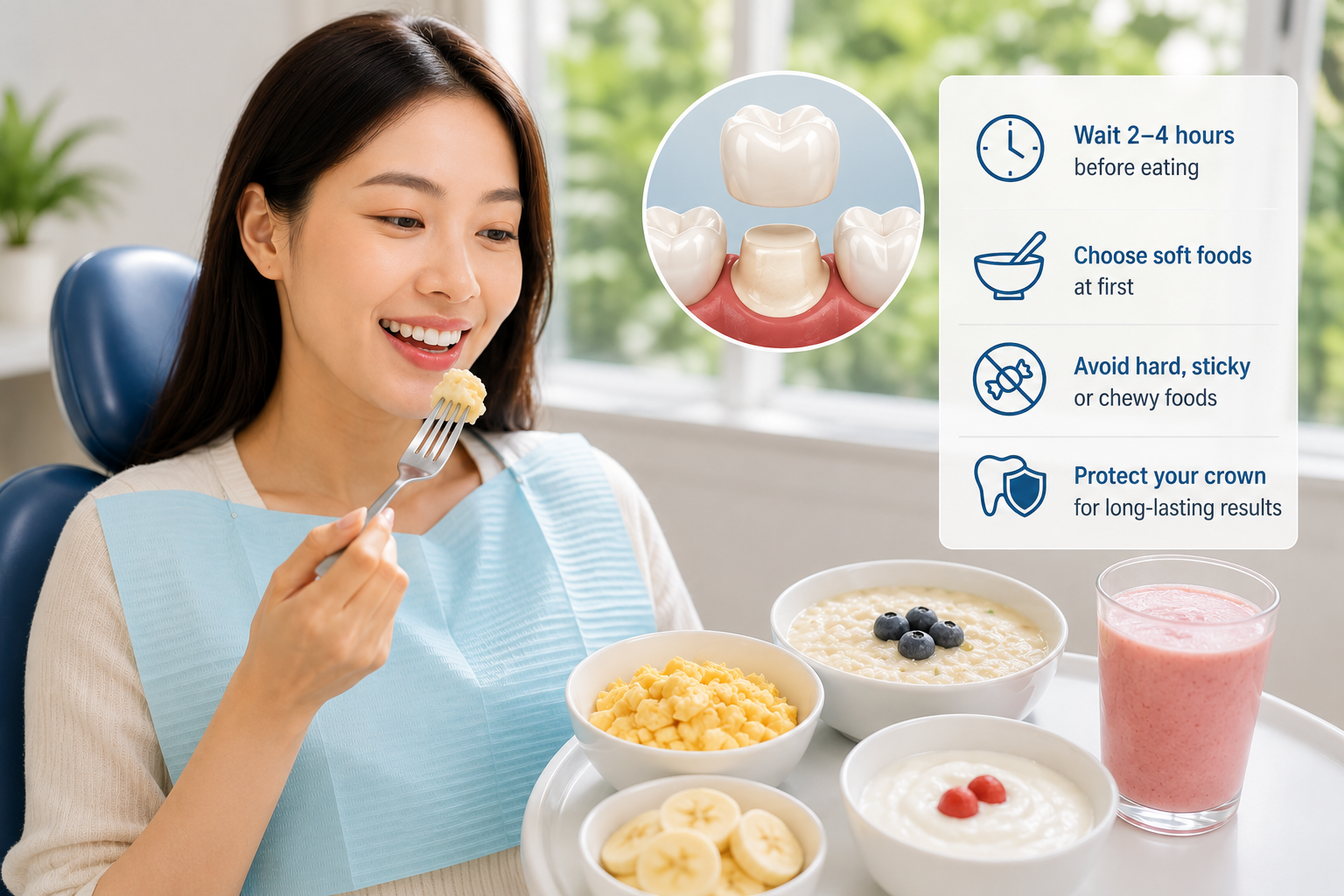
For permanent crowns, most patients can eat soft foods after the numbness from local anesthesia disappears.
Typically, this means waiting between two and four hours after treatment.
Eating while your mouth remains numb increases the risk of accidentally biting your tongue, lips, or cheeks. International patients who plan lunch immediately after treatment often find it more comfortable to schedule meals once normal sensation returns.
The timeline for eating after a dental crown usually looks like this:
First hour:
Avoid eating completely.
Two to four hours:
Soft foods become acceptable once numbness disappears.
First 24 hours:
Avoid extremely hard, sticky, or chewy foods.
After 24 hours:
Most patients can gradually return to their normal diet unless advised otherwise by their dentist.
What Can You Eat After a Dental Crown?
Choosing the right foods helps reduce discomfort and prevents unnecessary pressure on the crown.
Good options include:
Mashed potatoes
Soup that is warm rather than hot
Yogurt
Scrambled eggs
Smoothies
Rice
Soft noodles
Fish
Oatmeal
Bananas
Steamed vegetables
These foods allow comfortable chewing while minimizing stress on the new restoration.
Many patients traveling for dental treatment in Vietnam appreciate that Vietnamese cuisine offers many soft food choices such as pho noodles, porridge, steamed rice dishes, and soft seafood options.
Foods to Avoid After Receiving a Dental Crown
The first 24 hours are especially important for protecting your restoration.
Avoid:
Ice cubes
Hard candies
Nuts
Steak
Crusty bread
Chewing gum
Sticky caramel
Popcorn
Toffee
Very hot foods
Very cold drinks
These foods may loosen temporary cement, create sensitivity, or place excessive pressure on the crown before it fully settles.
Patients often underestimate the risks associated with sticky foods. In reality, sticky foods are among the most common reasons temporary crowns become dislodged.
When considering eating after a dental crown, avoiding sticky foods is just as important as avoiding hard foods.
Eating With a Temporary Crown
Temporary crowns require more attention than permanent crowns.
Temporary materials are designed to protect the tooth for a short period while your permanent restoration is being fabricated.
If you have a temporary crown:
Chew on the opposite side of your mouth whenever possible.
Avoid sticky foods entirely.
Avoid chewing gum.
Cut food into smaller pieces.
Brush gently around the crown area.
Floss carefully by sliding the floss out sideways instead of lifting it upward.
Many temporary crown emergencies occur because patients unknowingly pull the crown off while flossing.
Fortunately, these situations are usually easy to resolve if addressed quickly by your dentist.
Why Does My Crown Feel Sensitive When Eating?
Mild sensitivity during the first few days is completely normal.
You may notice sensitivity to:
Cold drinks
Hot beverages
Sweet foods
Pressure while chewing
This sensitivity often occurs because the tooth underneath the crown has recently undergone preparation and may need time to adjust. Mild sensitivity after crown placement is considered normal and is also acknowledged by the National Health Service (NHS), especially during the first few days following treatment.
Most cases improve within a few days or weeks.
However, contact your dentist if you experience:
Severe pain
Sharp pain while biting
Increasing discomfort
Pain that wakes you at night
A crown that feels loose
These symptoms may indicate bite issues or underlying nerve irritation requiring adjustment.
Can You Eat Normally After a Dental Crown Has Settled?
Yes.
Once healing is complete and the crown has fully adapted to your bite, you can generally return to eating normally.
Modern ceramic and zirconia crowns are designed to withstand everyday chewing forces.
Patients with properly fitted crowns can comfortably enjoy:
Meat
Fresh vegetables
Fruit
Bread
Rice
Pasta
Most snacks and desserts
However, dentists still recommend avoiding habits that may damage natural teeth as well as crowns, including:
Chewing ice
Opening packages with teeth
Biting fingernails
Cracking nuts with teeth
Using teeth as tools
A crown is strong, but preserving it properly can help it last 10 to 15 years or even longer.
How Long Do Dental Crowns Usually Last?
The lifespan of a crown depends on several factors:
Material selection
Oral hygiene habits
Grinding or clenching habits
Diet
Regular dental checkups
Porcelain and zirconia crowns often last between 10 and 15 years, while many patients enjoy even longer results with excellent maintenance.
Routine professional cleaning and examinations remain the best strategy for maximizing longevity.
According to the American Dental Association (ADA), maintaining good oral hygiene and attending regular dental check-ups are essential factors in extending the lifespan of dental crowns.
Dental Crowns in Vietnam for International Patients
Vietnam has become one of Asia’s fastest-growing dental tourism destinations thanks to internationally trained dentists, advanced technology, and significant cost savings compared with Australia, New Zealand, the United States, and Canada.
At Avora Dental, international patients frequently combine treatment with holidays in Ho Chi Minh City.
To make treatment even more convenient, Avora Dental is currently offering a special July and August promotion:
Free 4-star hotel accommodation for 5 days and 4 nights for patients with dental treatment plans valued at 4,000 USD or more.
This program allows patients to focus on recovery and enjoy their stay while reducing travel expenses.
Final Thoughts
Understanding the rules for eating after a dental crown can make your recovery smoother and help protect your restoration for years to come.
Most patients can resume soft foods within a few hours and return to normal eating habits within a day or two. The key is to avoid hard, sticky, and excessively hot foods during the initial healing period.
If you experience unusual discomfort or have concerns about your crown, contacting your dentist promptly is always the safest approach.
With proper care, your crown can provide many years of comfort, function, and confidence. Patients looking for additional guidance on crown care and oral hygiene can also refer to resources provided by the Mayo Clinic.
Frequently Asked Questions
How long should I wait before eating after a dental crown?
Most patients should wait at least 30 to 60 minutes before eating and preferably until the numbness has completely worn off.
What is the best food for eating after a dental crown?
Soft foods such as yogurt, eggs, soup, rice, and fish are excellent choices during the first day.
Can I drink coffee after getting a dental crown?
Yes, but it is best to avoid extremely hot beverages for the first few hours to reduce sensitivity.
Can I eat pizza after a dental crown?
Soft pizza may be acceptable after the numbness disappears, but avoid hard crusts during the first 24 hours.
Why does my crown hurt when I chew?
Mild discomfort is common initially, but persistent pain or sharp biting pain should be evaluated by your dentist.
Can a crown fall off while eating?
Temporary crowns can occasionally become loose if exposed to sticky or hard foods, which is why dietary precautions are important during the first few weeks.