
Tooth Extraction


Quick Answer
Tooth extraction is a common dental procedure performed to safely remove teeth that are severely damaged, infected, impacted, or no longer suitable for restoration. Depending on the tooth’s condition and position, treatment may involve a simple extraction or a more advanced surgical approach. At Avora Dental, our priority is to preserve your natural teeth whenever possible. When extraction is necessary, we focus on gentle techniques, patient comfort, and careful treatment planning to support a smooth recovery and long-term oral health.


What Is Tooth Extraction?
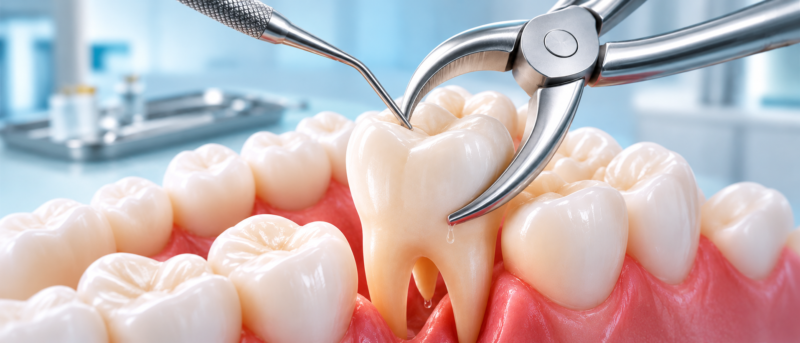
Tooth extraction is a dental procedure that involves carefully removing a tooth from its socket in the jawbone. It is generally recommended when a tooth is too severely damaged to be restored, poses a risk to surrounding oral structures, or must be removed as part of a carefully planned dental treatment.
Although preserving natural teeth is always preferable whenever clinically possible, extraction may be necessary to address advanced tooth decay, persistent infection, severe fractures, problematic wisdom teeth, or significant periodontal disease.
There are two main types of tooth extraction:
- Simple Tooth Extraction: Performed when the tooth is visible and accessible above the gumline. The dentist gently loosens the tooth using specialised instruments before removing it from the socket.
- Surgical Tooth Extraction: Recommended for more complex cases, such as impacted wisdom teeth, fractured teeth, or teeth that have not fully erupted. The procedure may involve a small gum incision, limited bone removal, or sectioning the tooth into smaller pieces for safer removal.
At Avora Dental in Vietnam, our approach begins with a comprehensive oral examination and appropriate diagnostic imaging. Before recommending extraction, our dentists evaluate whether alternative treatments, such as root canal therapy, dental crowns, or periodontal care, could help preserve the natural tooth.
When extraction is necessary, we prioritise patient comfort, precise surgical planning, and careful management of the surrounding tissues to support predictable healing and long-term oral health.
For international patients, an initial online consultation may help assess treatment needs and estimate costs. However, the final diagnosis and treatment plan are confirmed following an in-person clinical examination.
Who Is a Good Candidate for Tooth Extraction?
Tooth extraction may be recommended when retaining a tooth would compromise oral health or when the tooth cannot be restored with a reasonable long-term prognosis.
Common reasons for tooth extraction include:
1. Severe Tooth Decay
When decay extends deeply into the tooth and leaves insufficient healthy structure for a reliable restoration, extraction may be necessary.
However, not every severely decayed tooth requires removal. Root canal treatment followed by an appropriate restoration may still be possible in selected cases.
2. Advanced Periodontal Disease
Severe gum disease can damage the bone and supporting tissues that hold teeth in place.
When a tooth has lost substantial periodontal support and cannot be maintained predictably, extraction may help manage the condition and support further treatment planning.
3. Impacted or Problematic Wisdom Teeth
Wisdom teeth may become trapped beneath the gums or grow at an unfavourable angle.
Extraction may be recommended when they cause repeated infections, damage adjacent teeth, develop cystic changes, or contribute to other clinically significant problems.
However, healthy, symptom-free wisdom teeth do not automatically require removal.
4. Severely Fractured or Damaged Teeth
Teeth affected by deep fractures, extensive structural damage, or certain root fractures may be impossible to restore successfully.
In these situations, extraction may be the most appropriate option to prevent further complications.
5. Persistent Dental Infection
A severely infected tooth may require extraction when root canal treatment or other tooth-preserving procedures are unsuitable or unlikely to succeed.
Removing the affected tooth can help eliminate the source of infection, although additional treatment may be required depending on the extent of the infection.
6. Orthodontic or Restorative Treatment Planning
In selected cases, tooth extraction may form part of a comprehensive orthodontic, implant, or prosthetic treatment plan.
Such decisions should be based on a detailed assessment of tooth alignment, available space, bite function, and long-term treatment goals.
Important Considerations Before Extraction
Tooth extraction is an irreversible procedure. Removing a permanent tooth may affect chewing efficiency, neighbouring tooth positions, and the surrounding jawbone over time.
Patients with certain medical conditions or those taking medications such as anticoagulants or antiresorptive drugs may require additional precautions.
At Avora Dental, our dentists review relevant medical history, current medications, allergies, oral health, and diagnostic findings before recommending treatment.
Patients should never stop prescribed medication without guidance from the appropriate healthcare professional.
What Are the Main Benefits of Tooth Extraction?
When clinically necessary, tooth extraction can provide important benefits for oral health, comfort, and future dental treatment.
1. Addresses the Source of Dental Pain and Infection
Removing a severely damaged or infected tooth can eliminate a source of persistent discomfort and help prevent ongoing problems associated with that tooth.
The dentist will also assess whether additional treatment is required to manage infection or inflammation in surrounding tissues.
2. Protects Surrounding Teeth and Oral Structures
Problematic teeth, particularly impacted wisdom teeth, may sometimes damage neighbouring teeth or contribute to repeated infections.
Carefully planned extraction can help prevent further complications when there is a clear clinical indication.
3. Supports Long-Term Oral Health
Removing a tooth with a hopeless prognosis may help establish a healthier oral environment and allow appropriate management of surrounding gum and bone tissues.
4. Creates Opportunities for Tooth Replacement
When a permanent tooth must be removed, extraction can be coordinated with future restorative treatment.
Depending on the patient’s needs, replacement options may include dental implants, fixed bridges, or removable dentures.
Early planning is particularly important because the jawbone naturally changes after tooth removal.
5. Facilitates Comprehensive Dental Treatment
In certain orthodontic or restorative cases, removing a carefully selected tooth can create space or improve the feasibility of a broader treatment plan.
At Avora Dental, successful tooth extraction is not simply about removing a problematic tooth. It is about protecting your overall oral health, minimising unnecessary tissue damage, and planning appropriately for the future.
How Does the Tooth Extraction Procedure Work at Avora Dental?
At Avora Dental, tooth extraction follows a structured clinical process designed to prioritise patient safety, comfort, and appropriate healing.
Step 1: Comprehensive Consultation and Diagnosis
Your dentist begins by examining the affected tooth and surrounding oral structures.
The assessment may include:
- Review of your dental and medical history.
- Examination of the tooth, gums, and neighbouring teeth.
- Evaluation of tooth mobility and periodontal support.
- Dental X-rays to assess root anatomy and surrounding bone.
- CBCT imaging when additional three-dimensional information is clinically necessary.
- Discussion of possible tooth-preserving alternatives.
Your dentist explains the diagnosis, recommended treatment, expected benefits, potential risks, and available alternatives before obtaining informed consent.
Step 2: Local Anaesthesia and Patient Comfort
Before the procedure, local anaesthesia is administered to numb the tooth and surrounding tissues.
You may feel pressure or movement during extraction, but sharp pain should not be expected once adequate anaesthesia has been achieved.
If you experience discomfort, inform your dentist immediately so the anaesthesia can be reassessed.
For patients with significant dental anxiety or complex surgical needs, additional comfort-management options may be discussed where clinically appropriate and available.
Step 3: Gentle Tooth Removal
The extraction technique depends on the position, condition, and anatomy of the tooth.
For simple extractions, specialised instruments are used to loosen the tooth carefully before removal.
For surgical extractions, the dentist may create a small incision in the gum to access the tooth. In selected cases, a limited amount of surrounding bone may be removed or the tooth may be divided into sections.
The objective is to remove the tooth safely while minimising unnecessary trauma to surrounding tissues.
Step 4: Socket Cleaning and Bone Preservation Assessment
After the tooth is removed, the dentist examines the extraction socket.
Any necessary cleaning or removal of pathological tissue is performed, and the surrounding bone is assessed.
If a future dental implant is being considered, socket preservation or bone grafting may be recommended in suitable cases.
These procedures are not necessary for every extraction and should be discussed as part of the individual treatment plan.
Step 5: Bleeding Control and Immediate Aftercare
Once the extraction is complete, sterile gauze is placed over the socket to help control bleeding and support blood clot formation.
Sutures may be used when required, particularly following surgical extraction.
Your dentist provides instructions on:
- Managing bleeding and swelling.
- Eating and drinking after the procedure.
- Cleaning your mouth safely.
- Taking prescribed medication.
- Avoiding activities that could disturb the healing blood clot.
- Recognising symptoms that require professional attention.
Step 6: Healing Review and Future Treatment Planning
Healing progress varies depending on the complexity of the extraction, the patient’s general health, and the condition of the surrounding tissues.
A follow-up appointment may be recommended to assess healing or remove non-dissolving sutures.
If the extracted tooth requires replacement, your dentist will discuss the appropriate timing for implant placement, bridge treatment, or another restorative solution.
For international patients, Avora Dental recommends discussing travel plans and follow-up requirements before undergoing surgical treatment.
Tooth Extraction Techniques, Materials and Modern Dental Technology
Modern tooth extraction involves more than simply removing a tooth. Careful diagnosis, appropriate instruments, and thoughtful management of surrounding tissues can help reduce unnecessary trauma and support recovery.
Minimally Traumatic Extraction Techniques
Whenever clinically appropriate, dentists may use specialised instruments and controlled extraction techniques to minimise damage to the surrounding gums and jawbone.
Preserving the surrounding tissues can be particularly important when future dental implant treatment is planned.
However, the safest technique depends on the tooth’s anatomy and condition.
Surgical Wisdom Tooth Removal
Impacted wisdom teeth may require surgical extraction when they cause infection, damage, or other clinically significant problems.
Depending on the position of the tooth, surgery may involve gum access, limited bone removal, and tooth sectioning.
For lower wisdom teeth located close to important nerves, additional imaging may be recommended.
In selected high-risk cases, coronectomy—removing the crown while intentionally retaining the roots—may be considered as an alternative to complete removal.
Bone Grafting and Socket Preservation
After a tooth is extracted, the surrounding jawbone naturally undergoes changes during healing.
When future implant placement is planned, socket preservation may help limit some of these changes.
Bone grafting materials may be considered to support the remaining ridge, although they do not completely prevent bone remodelling or guarantee that additional grafting will never be needed.
The decision depends on bone anatomy, infection status, the proposed replacement, and the patient’s individual circumstances.
Digital Imaging and Treatment Planning
Dental X-rays are commonly used to evaluate root position, surrounding bone, and neighbouring structures.
For more complex cases, CBCT imaging can provide detailed three-dimensional information to assist surgical planning.
At Avora Dental, diagnostic imaging is selected according to clinical need, with the aim of supporting informed decisions and safe treatment.
Technology is an important planning tool, but it does not replace the experience and judgement of the treating dentist.
How Much Does Tooth Extraction Cost in Vietnam?
Tooth extraction in Vietnam can be more affordable than comparable private dental treatment in countries such as Australia, the United Kingdom, and the United States.
However, the total cost depends on the complexity of the procedure, the condition of the tooth, and whether additional treatment is required.
At Avora Dental, tooth extraction pricing is determined following an assessment of the patient’s individual clinical needs.
What Factors Affect the Cost of Tooth Extraction?
1. Type of Extraction
Simple extractions are generally less expensive than surgical procedures because they usually require fewer clinical steps.
2. Tooth Position and Root Anatomy
Teeth with curved, divergent, or difficult-to-access roots may require more complex treatment.
3. Wisdom Tooth Complexity
The cost of wisdom tooth removal may vary depending on whether the tooth is fully erupted, partially impacted, or completely impacted.
4. Diagnostic Imaging
Dental X-rays or CBCT scans may be recommended depending on the clinical findings and surgical complexity.
5. Anaesthesia and Additional Procedures
The need for additional anaesthesia services, bone grafting, or other clinically indicated procedures can influence the overall cost.
6. Follow-Up Care
Certain surgical cases may require additional reviews, wound assessment, or suture removal.
Transparent Treatment Planning at Avora Dental
Before proceeding with extraction, patients should receive a clear explanation of the proposed treatment and expected costs.
A personalised quotation should identify which services are included, such as consultation, imaging, anaesthesia, extraction, medication, and follow-up care.
For international patients, an initial online consultation can provide useful preliminary guidance. However, the final treatment cost can only be confirmed after an appropriate clinical assessment.
At Avora Dental, our goal is to provide safe, carefully planned tooth extraction treatment with clear communication, personalised care, and attention to your long-term oral health.
How Long Should International Patients Stay in Vietnam for Tooth Extraction?
For most patients, a simple tooth extraction can be completed in a single dental appointment, making it a relatively convenient procedure for international visitors seeking dental care in Vietnam.
However, the recommended length of stay depends on the complexity of the extraction, the patient’s overall oral health, and whether additional procedures or follow-up appointments are necessary.
Simple Tooth Extraction
A straightforward extraction typically takes approximately 20–45 minutes, although the duration varies depending on the tooth’s condition and accessibility.
Most patients can return to light daily activities shortly afterward, provided they follow their dentist’s instructions.
For uncomplicated cases, an extended stay in Vietnam may not be necessary.
Surgical Tooth Extraction and Wisdom Teeth Removal
More complex procedures, including impacted wisdom tooth removal or surgical extraction, may require additional treatment time and a longer recovery period.
Patients may experience swelling, tenderness, or mild discomfort during the first few days.
For international visitors undergoing complex extractions, allowing approximately 3–7 days in Vietnam may provide time for initial recovery and any recommended follow-up examination.
This is a planning guideline rather than a fixed requirement.
Healing Timeline After Tooth Extraction
- First 24 hours: A protective blood clot forms in the extraction socket, helping initiate healing.
- Days 2–3: Swelling and discomfort may be most noticeable, particularly after surgical extraction.
- Days 3–7: Many patients experience gradual improvement in discomfort and swelling.
- Weeks 1–2: Gum tissues continue healing, although the socket may not yet be fully closed.
- Following months: The underlying jawbone gradually remodels as the extraction site heals.
At Avora Dental, we recommend planning your visit around your individual treatment needs rather than rushing the procedure to fit a travel schedule.
If you are planning to fly shortly after extraction, particularly following complex surgery or treatment involving the upper jaw and sinus, discuss your travel arrangements with your dentist beforehand.
Recovery and Aftercare: How to Heal Safely After Tooth Extraction
Proper aftercare is essential for comfortable recovery and reducing the risk of complications following tooth extraction.
After a tooth is removed, a blood clot naturally forms inside the socket. This clot protects the underlying tissues and plays an important role in the healing process.
Protecting the blood clot during the first few days is particularly important.
The First 24 Hours After Extraction
During the initial healing period, patients should follow these precautions:
- Control bleeding: Bite gently but firmly on the gauze provided by your dentist for the recommended period.
- Avoid vigorous rinsing or spitting: These actions may disturb the protective blood clot.
- Do not use drinking straws: Suction may interfere with early healing.
- Avoid smoking and vaping: Nicotine and tobacco exposure can impair healing and increase the risk of complications.
- Choose soft, cool or lukewarm foods: Options such as yoghurt, mashed potatoes, and soft eggs are generally easier to eat.
- Avoid strenuous exercise: Heavy physical activity may increase bleeding and discomfort.
- Take medication as directed: Follow your dentist’s instructions regarding pain relief and any prescribed medication.
Avoid touching the extraction site with your fingers or tongue.
Days 2–7: Supporting the Healing Process
As healing progresses, mild tenderness, swelling, and jaw stiffness may occur, particularly after surgical extractions.
To support recovery:
- Continue brushing your teeth carefully while avoiding direct trauma to the extraction site.
- Begin gentle warm saltwater rinses after the first 24 hours if recommended by your dentist.
- Gradually return to your usual diet as comfort allows.
- Avoid hard, crunchy, or sharp foods that may irritate the healing socket.
- Maintain good hydration and adequate nutrition.
- Attend any scheduled follow-up appointments.
Cold compresses may help reduce swelling during the early recovery period when used according to your dentist’s instructions.
When Should You Contact a Dentist?
Although some discomfort is expected, certain symptoms may indicate a complication requiring prompt professional assessment.
Contact your dentist if you experience:
- Bleeding that continues despite sustained firm pressure.
- Severe or worsening pain several days after extraction.
- Increasing swelling rather than gradual improvement.
- Fever, pus, or other signs of infection.
- Persistent numbness or unusual changes in sensation.
- A foul taste or unpleasant odour accompanied by significant pain.
Difficulty breathing, difficulty swallowing, rapidly spreading swelling, or uncontrolled bleeding requires immediate emergency medical attention.
At Avora Dental, we encourage international patients to discuss follow-up arrangements and emergency contact information before leaving Vietnam.
Risks, Limitations and Possible Complications of Tooth Extraction
Tooth extraction is a commonly performed dental procedure, but it is still a clinical intervention that carries potential risks.
Understanding these risks helps patients make informed decisions and recognise when additional care may be necessary.
Temporary discomfort, swelling, and mild bruising are common following extra
1. Pain, Swelling and Bruising
ction, particularly after surgical procedures.
These symptoms usually improve as healing progresses, although the severity and duration vary between individuals.
2. Bleeding After Extraction
Minor oozing during the early healing period is expected.
However, persistent or heavy bleeding may require additional treatment, particularly in patients with certain medical conditions or those taking medications that affect blood clotting.
3. Dry Socket (Alveolar Osteitis)
Dry socket occurs when the protective blood clot is lost or breaks down prematurely, leaving the underlying bone exposed.
It can cause significant pain, often beginning a few days after extraction.
Smoking, traumatic extraction, and certain other factors can increase the risk.
Professional treatment may be necessary to relieve symptoms and support healing.
4. Infection
Although uncommon in uncomplicated cases, infection can develop after tooth extraction.
Possible symptoms include increasing pain, swelling, fever, pus, or an unpleasant taste.
Not every extraction requires antibiotics. Your dentist will determine whether medication or additional treatment is clinically necessary.
5. Damage to Adjacent Teeth or Restorations
In complex cases, neighbouring teeth, fillings, or crowns may be affected during extraction.
Careful assessment and appropriate surgical techniques help minimise this risk.
6. Nerve-Related Complications
Lower wisdom teeth may be located close to nerves responsible for sensation in the lower lip, chin, and tongue.
In certain cases, extraction can cause temporary or, rarely, persistent changes in sensation.
Additional imaging may be recommended when the relationship between the tooth and nearby nerves requires further evaluation.
7. Sinus-Related Complications
The roots of upper back teeth may lie close to the maxillary sinus.
In some cases, extraction can create an opening between the mouth and sinus, requiring additional management.
Patients undergoing upper molar extraction should follow any specific sinus precautions provided by their dentist.
8. Changes in Jawbone and Tooth Alignment
After a permanent tooth is removed, the surrounding bone naturally undergoes remodelling.
If the missing tooth is not replaced when appropriate, neighbouring teeth may gradually shift, potentially affecting bite function.
For this reason, tooth replacement options should be discussed as part of the overall treatment plan.
Patient Safety and Informed Treatment at Avora Dental
At Avora Dental, our approach to tooth extraction focuses on careful diagnosis, appropriate treatment selection, and clear communication throughout the patient journey.
Before treatment, patients should understand:
- Why extraction is recommended and whether the tooth can be preserved.
- Which extraction technique is appropriate.
- The expected recovery process and possible complications.
- Whether additional imaging or treatment is required.
- What to do if a problem develops after returning home.
Our goal is to help every patient make an informed decision while supporting a safe, comfortable treatment experience and long-term oral health.
A successful extraction is not only about removing a problematic tooth — it is about protecting the surrounding tissues, supporting proper healing, and preserving your future dental health.
How Does Tooth Extraction Compare with Other Dental Treatments?
Tooth extraction is not always the first solution for a damaged or infected tooth. Whenever possible, preserving natural teeth is generally the preferred approach, provided they can be restored successfully and maintained over time.
At Avora Dental, our treatment philosophy focuses on protecting natural tooth structure, maintaining oral function, and recommending extraction only when clinically justified.
Tooth Extraction vs. Root Canal Treatment
Root canal treatment is designed to save a tooth affected by infection or inflammation within its pulp. The procedure removes infected tissue, disinfects the root canals, and seals the tooth to help prevent further infection.
When sufficient healthy tooth structure remains, root canal treatment followed by an appropriate restoration may allow the tooth to function for many years.
Tooth extraction, however, may be necessary when a tooth is severely fractured, extensively damaged, or cannot be restored with a predictable long-term outcome.
The decision should be based on the tooth’s condition, surrounding bone support, infection severity, and overall prognosis rather than cost alone.
Tooth Extraction vs. Dental Restoration
For teeth affected by cavities, fractures, or structural damage, restorative treatments such as fillings, dental crowns, or other appropriate procedures may help preserve the natural tooth.
However, when damage extends too deeply or insufficient healthy structure remains, extraction may become the most reliable option.
At Avora Dental, our dentists assess the available treatment alternatives before recommending removal.
What Happens After Tooth Extraction?
When a permanent tooth is removed, replacing it may be important for maintaining chewing efficiency, bite stability, and long-term oral health.
Depending on the location of the missing tooth and your individual needs, replacement options may include:
- Dental Implants: An implant-supported restoration replaces a missing tooth without relying on neighbouring teeth for support. Adequate bone and appropriate healing conditions are essential.
- Dental Bridges: A fixed restoration uses neighbouring teeth or implants for support to replace one or more missing teeth.
- Removable Dentures: A removable option that may be suitable for patients missing several teeth or seeking a less invasive approach.
- No Immediate Replacement: In selected situations, leaving the space unrestored may be reasonable following a professional assessment.
Whenever possible, the replacement plan should be discussed before extraction to help preserve future treatment options.
At Avora Dental, our priority is not simply to remove a problematic tooth, but to develop a treatment plan that supports your long-term dental health, comfort, and quality of life.
Why Choose Vietnam for Tooth Extraction?
Vietnam has become an attractive destination for international patients seeking accessible dental services, competitive treatment costs, and personalised care.
For patients who require tooth extraction as part of a broader dental treatment plan, Vietnam may offer opportunities to combine necessary dental care with an overseas visit.
Competitive Dental Treatment Costs
Dental treatment in Vietnam may be more affordable than comparable private dental care in countries such as Australia, the United Kingdom, and the United States.
Lower operating costs can contribute to competitive pricing, particularly for patients requiring multiple procedures or comprehensive restorative treatment.
However, affordability should never be the only factor when choosing a dental clinic.
Patients should also consider professional qualifications, diagnostic standards, infection control procedures, treatment planning, and follow-up arrangements.
Modern Diagnostic Technology
Accurate diagnosis is essential before any tooth extraction.
Dental X-rays and, when clinically necessary, CBCT imaging can help dentists evaluate root anatomy, surrounding bone, impacted teeth, and their relationship to nearby anatomical structures.
These assessments support appropriate treatment planning, particularly for complex surgical extractions and wisdom tooth removal.
At Avora Dental, our approach emphasises careful clinical assessment and selecting diagnostic techniques according to each patient’s individual needs.
Convenient Treatment Planning for International Patients
Many straightforward tooth extractions can be completed during a single appointment.
More complex procedures may require additional recovery time, follow-up examinations, or coordination with future restorative treatment.
For international patients, discussing the expected recovery period and travel schedule before treatment is especially important.
Our goal at Avora Dental is to help patients understand their treatment pathway and make practical arrangements for their visit to Vietnam.
Personalised Dental Care at Avora Dental
Every patient’s dental condition is different, and tooth extraction should never be approached as a routine recommendation without proper assessment.
At Avora Dental, we focus on identifying the underlying problem, evaluating tooth-preserving alternatives, and explaining the most appropriate treatment options.
When extraction is necessary, the aim is to minimise unnecessary tissue trauma, support healing, and protect future restorative possibilities.
Questions to Ask Before Booking a Tooth Extraction
Before undergoing tooth extraction, particularly when travelling internationally for dental care, it is important to understand the diagnosis, treatment process, potential risks, and expected recovery.
Consider discussing the following questions with your dentist:
- Is tooth extraction absolutely necessary? Ask whether root canal treatment, periodontal care, or another restorative procedure could preserve the natural tooth.
- What type of extraction will I need? Understand whether the procedure is simple or surgical and why that technique is recommended.
- What diagnostic imaging is required? Ask whether standard dental X-rays are sufficient or if additional imaging is necessary.
- What are the potential risks in my case? Discuss possible complications, including infection, dry socket, nerve injury, or sinus-related concerns when relevant.
- How long will recovery take? Understand the expected healing process and when you may safely return to normal activities or travel.
- Will I need to replace the extracted tooth? Ask about dental implants, bridges, dentures, or other appropriate options.
- What is included in the treatment cost? Request a clear quotation covering consultation, imaging, anaesthesia, extraction, medication, and follow-up care.
- What happens if complications develop after I return home? Confirm how to contact the clinic and whether additional care may be required from a local dentist.
At Avora Dental, we encourage patients to ask questions and understand their treatment options before making a decision.
Quality, Safety and Patient Care at Avora Dental
A successful tooth extraction depends on accurate diagnosis, appropriate clinical techniques, careful management of surrounding tissues, and effective post-treatment care.
At Avora Dental, our approach to dental treatment is guided by four essential priorities.
1. Accurate Diagnosis and Responsible Treatment Planning
Before recommending extraction, our dentists assess the affected tooth, surrounding tissues, and relevant medical history.
The objective is to determine whether the tooth can be preserved or whether removal offers a more predictable long-term outcome.
2. Patient Comfort and Gentle Treatment
Tooth extraction should be performed using appropriate anaesthesia and techniques suited to the individual clinical situation.
Our approach focuses on patient comfort, clear communication, and minimising unnecessary trauma to the surrounding tissues.
3. Clear Information and Informed Consent
Patients should understand why extraction is recommended, how the procedure will be performed, and what potential complications may occur.
At Avora Dental, we believe that transparent communication is an essential part of responsible dental care.
4. Recovery Guidance and Long-Term Oral Health
Care does not end when the tooth is removed.
Appropriate aftercare instructions, healing assessments when indicated, and future tooth replacement planning all contribute to successful long-term management.
For international patients, discussing follow-up responsibilities and access to emergency dental care before returning home is particularly important.
Begin Your Dental Care Journey with Avora Dental
Whether you require a straightforward tooth extraction, surgical wisdom tooth removal, or a comprehensive dental treatment plan, making an informed decision is the first step toward protecting your oral health.
At Avora Dental in Vietnam, our focus is on personalised assessment, conservative treatment planning, and patient-centred dental care.
We believe that every treatment should have a clear purpose, realistic expectations, and a long-term plan that supports your comfort and oral function.
Need professional advice about tooth extraction?
Contact Avora Dental to arrange a consultation, discuss your dental concerns, and explore the most appropriate treatment options for your individual needs.
Avora Dental — Thoughtful Care for a Healthier, More Confident Smile.
Frequently Asked Questions About Tooth Extraction
Does tooth extraction hurt?
How long does it take to recover after tooth extraction?
What can I eat after having a tooth removed?
How should I care for my mouth during the first 24 hours?
How much does tooth extraction cost at Avora Dental?
What are the warning signs of complications after tooth extraction?
Key Takeaway
Tooth extraction is a carefully planned dental procedure performed when a tooth is severely damaged, infected, impacted, or cannot be reliably preserved through alternative treatments. Depending on the tooth’s condition and position, removal may involve a straightforward extraction or a more advanced surgical technique.
At Avora Dental, preserving your natural teeth is always a priority whenever clinically possible. When extraction becomes necessary, our approach focuses on accurate diagnosis, gentle treatment techniques, patient comfort, and proper healing. Every procedure is tailored to your individual oral health needs, with careful consideration of long-term dental function and future tooth replacement options.
Our goal is not simply to remove a problematic tooth, but to protect your oral health and support a healthier, more confident smile.