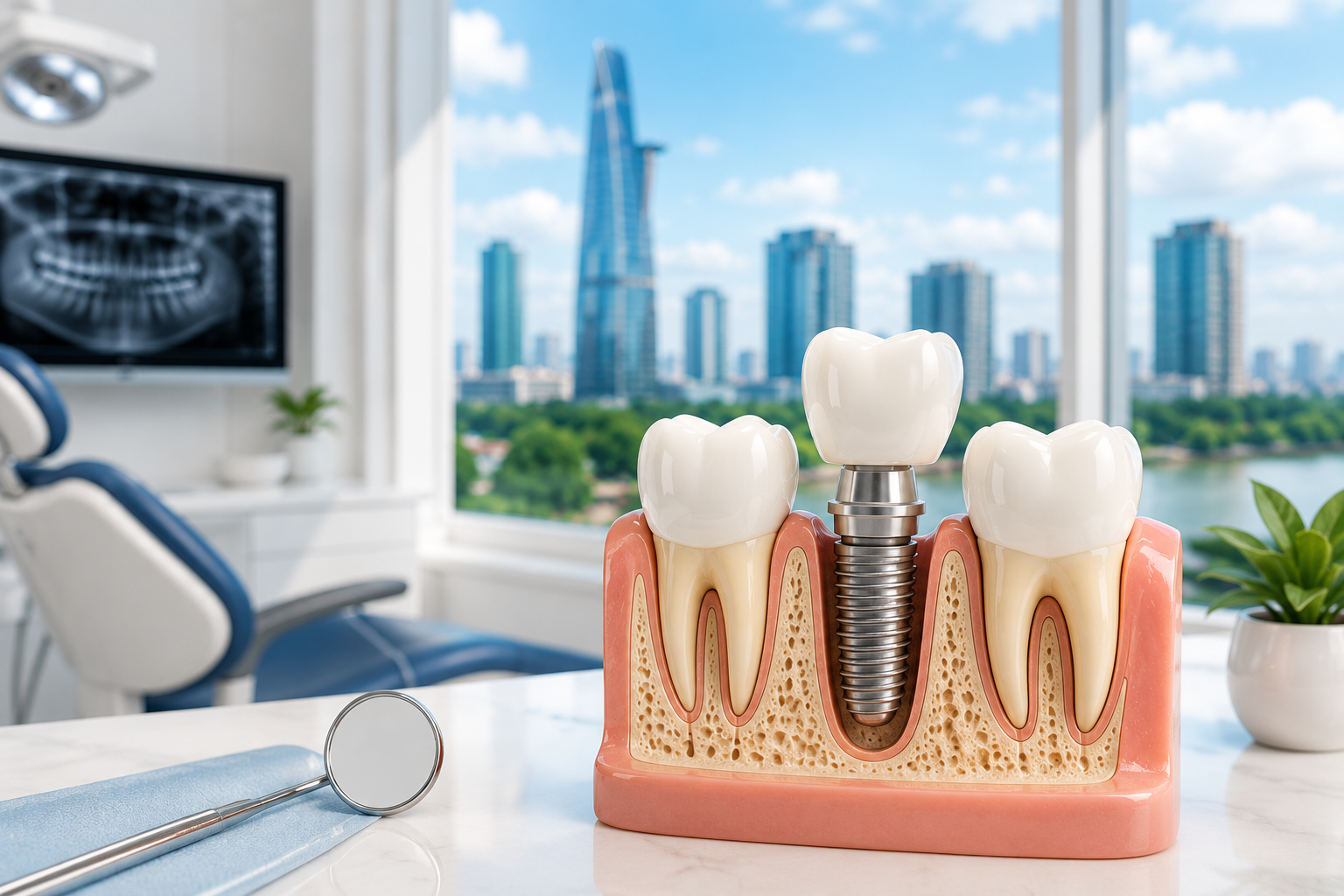
Discover how 3D CT Scans improve safety, accuracy, and long-term success for dental implants in Vietnam. Learn why advanced imaging technology is transforming implant treatment for international patients.
Vietnam has become one of Asia’s leading destinations for dental tourism, particularly for patients seeking affordable and high-quality dental implants. While cost savings attract many international visitors, modern technology is often what gives patients the confidence to choose Vietnam for treatment.
Among the most important innovations in implant dentistry today are 3D CT Scans. This advanced imaging technology allows implant specialists to evaluate bone structure, identify potential risks, and create highly accurate treatment plans before surgery even begins.
For patients considering dental implants abroad, understanding how 3D CT Scans work can help explain why modern implant procedures in Vietnam are safer, faster, and more predictable than ever before.
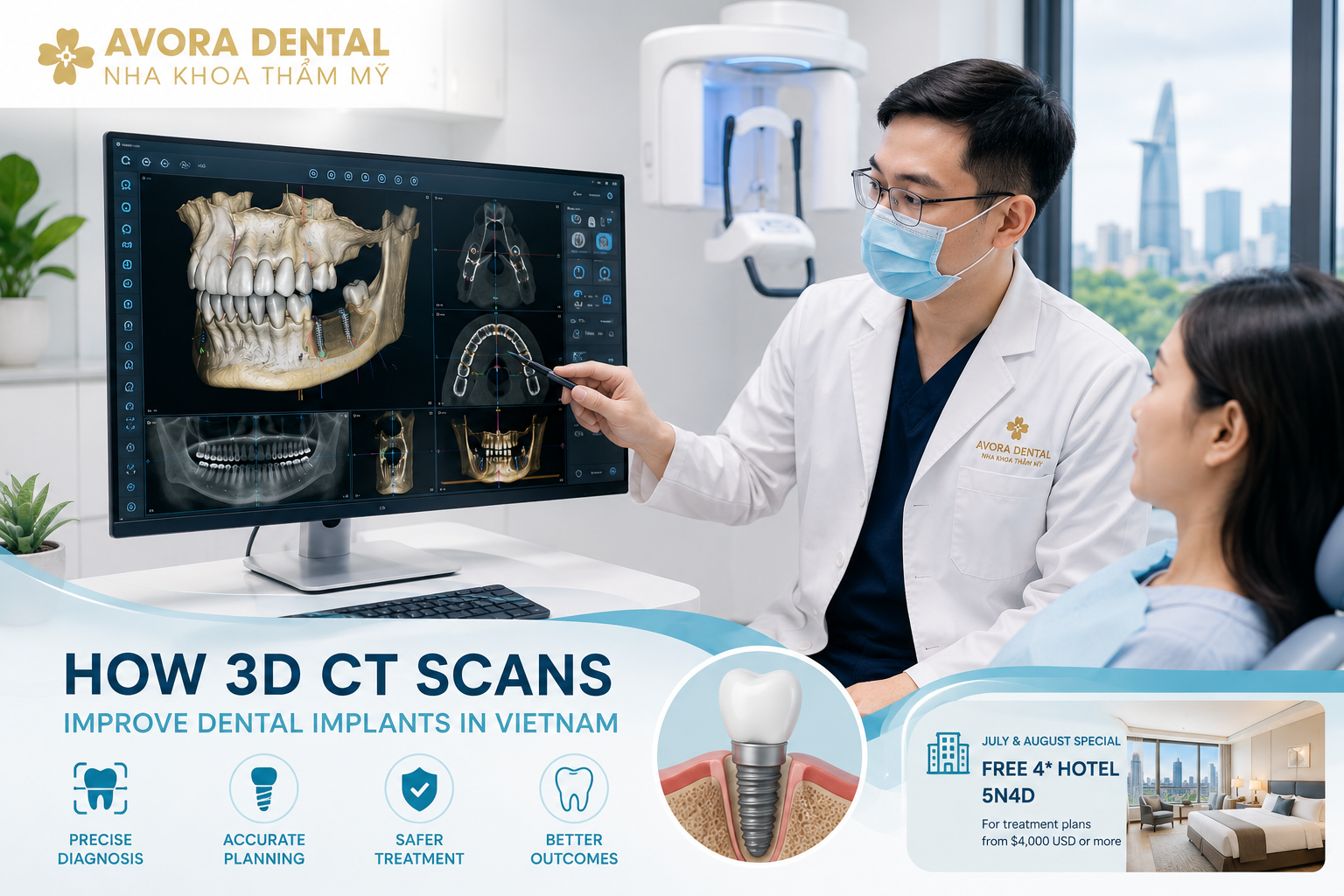
What Are 3D CT Scans in Dentistry?
3D CT Scans, also known as Cone Beam Computed Tomography (CBCT), are advanced imaging systems that create a three-dimensional view of a patient’s oral anatomy.
Unlike traditional dental X-rays that provide only flat two-dimensional images, 3D CT Scans capture detailed information about:
• Jawbone density and volume
• Bone width and height
• Nerve pathways
• Sinus locations
• Existing teeth roots
• Hidden infections or cysts
• Bone defects that may affect implant placement
The result is a complete digital map of the patient’s mouth, allowing implant specialists to plan treatment with exceptional precision.
According to American Academy of Implant Dentistry, three-dimensional imaging has become one of the most significant advances in implant planning and surgical safety.
Why Traditional X-Rays Are No Longer Enough for Complex Implant Cases
Conventional panoramic X-rays remain useful for routine dental examinations, but implant treatment requires much more detailed information.
A two-dimensional image cannot accurately show:
• The thickness of the jawbone
• The exact position of nerves
• Bone quality in different areas
• Hidden anatomical variations
• Potential complications before surgery
Without this information, implant placement becomes more dependent on estimation rather than precise planning.
This is why leading implant clinics in Vietnam now rely heavily on 3D CT Scans before beginning treatment.
How 3D CT Scans Improve Dental Implants in Vietnam
Accurate Bone Assessment
Successful dental implants require sufficient bone to support the implant fixture.
One of the biggest advantages of 3D CT Scans is the ability to measure bone dimensions with remarkable accuracy. Dentists can determine:
• Whether the patient has enough bone for implants
• If bone grafting is necessary
• Which implant size is most suitable
• The ideal angle for implant placement
This allows clinicians to customize treatment plans for each patient rather than using a generalized approach.
Improved Implant Positioning
Implants must be placed in the correct position not only for function but also for aesthetics.
Using 3D CT Scans, dentists can identify the optimal location for every implant while considering:
• Bite alignment
• Future crown positioning
• Smile appearance
• Long-term stability
The result is a restoration that looks natural and functions like a real tooth.
Protection of Important Anatomical Structures
One of the greatest concerns in implant surgery is avoiding damage to important structures such as nerves and sinus cavities.
For lower jaw implants, the inferior alveolar nerve must be protected to avoid numbness or altered sensation.
For upper jaw implants, dentists must avoid penetrating the sinus cavity.
Because 3D CT Scans clearly show these structures, implant surgeons can maintain safe distances during placement.
This significantly reduces complications and increases treatment predictability.
Better Planning for Full Mouth Implant Cases
Full mouth rehabilitation cases often involve multiple implants, bone grafting, or advanced techniques such as All-on-4 and All-on-6 treatments.
These cases are almost impossible to plan accurately using traditional imaging alone.
With 3D CT Scans, dentists can simulate the entire procedure digitally before surgery begins.
Benefits include:
• Reduced surgical time
• Improved implant distribution
• Better prosthetic outcomes
• Faster recovery
• Higher long-term success rates
How 3D CT Scans Support Digital Implant Planning
Modern implant dentistry increasingly relies on digital workflows.
After performing 3D CT Scans, the data can be integrated with intraoral digital scans to create virtual treatment plans.
Dentists can:
• Select implant size digitally
• Test different implant positions
• Simulate final restorations
• Design surgical guides
This process is commonly referred to as guided implant surgery.
According to U.S. Food and Drug Administration, cone beam CT technology provides valuable information for implant treatment planning and complex dental procedures.
Guided Surgery: The Next Step After 3D CT Scans
One of the biggest innovations made possible by 3D CT Scans is guided implant surgery.
Using specialized software, dentists create a surgical guide that acts like a navigation system during implant placement.
Benefits include:
• Smaller surgical incisions
• Increased precision
• Less bleeding
• Reduced swelling
• Faster recovery
• Shorter treatment times
For international patients visiting Vietnam on limited schedules, guided surgery can be particularly valuable because it improves efficiency while reducing risks.
Are 3D CT Scans Safe?
Many patients worry about radiation exposure.
Fortunately, modern dental CBCT systems use significantly lower radiation doses compared with conventional medical CT scanners.
The benefits of obtaining detailed anatomical information generally far outweigh the minimal radiation exposure involved.
Dental professionals only recommend 3D CT Scans when the information gained directly contributes to improved treatment outcomes.
Do All Implant Patients Need 3D CT Scans?
In modern implant dentistry, most specialists consider 3D CT Scans to be the standard of care rather than an optional extra.
They are especially important for:
• Single implants near important nerves
• Multiple implant cases
• Full mouth rehabilitation
• Bone graft procedures
• Sinus lift treatments
• Patients with previous implant failures
For international patients investing in travel and treatment, accurate planning becomes even more important.
Why International Patients Value Advanced Implant Technology in Vietnam
Vietnam has evolved far beyond being simply a low-cost dental destination.
Today many clinics invest heavily in:
• Digital smile design
• Intraoral scanners
• CAD/CAM restorations
• Guided implant surgery
• Digital treatment planning
• 3D CT Scans
For patients from Australia, New Zealand, North America, and Europe, these technologies provide reassurance that they are receiving treatment comparable to what is available in their home countries.
The difference is that treatment costs in Vietnam can still be significantly lower while maintaining international standards of care.
Questions Patients Should Ask About 3D CT Scans Before Choosing an Implant Clinic
When researching implant clinics in Vietnam, international patients should ask:
• Will a 3D CT scan be included in the consultation?
• Is implant planning performed digitally?
• Does the clinic offer guided implant surgery?
• How is bone quality evaluated?
• Will I receive a copy of my CT scan images?
These questions help patients identify clinics that prioritize safety and precision.
July and August Promotion for International Implant Patients
To support international visitors traveling to Vietnam for advanced dental treatment, patients with treatment plans valued at $4,000 USD or more can currently enjoy a special promotion:
Free 4-star hotel accommodation for 5 days and 4 nights during July and August.
This promotion helps reduce travel costs while allowing patients to recover comfortably during their implant journey in Vietnam.
Final Thoughts
Modern implant dentistry depends on precision, planning, and technology.
Among all recent innovations, 3D CT Scans have arguably transformed implant treatment more than any other technology. By allowing dentists to evaluate bone conditions, avoid complications, and plan implant placement digitally, 3D CT Scans improve both safety and long-term success rates.
For international patients considering dental implants in Vietnam, choosing a clinic that uses advanced imaging technology is one of the smartest decisions they can make.
The future of implant dentistry is digital, and 3D CT Scans are at the center of that transformation.