The all on 4 procedure restores missing teeth with four implants. Discover the treatment steps and recovery at Avora Dental.
What Is the All on 4 Procedure?
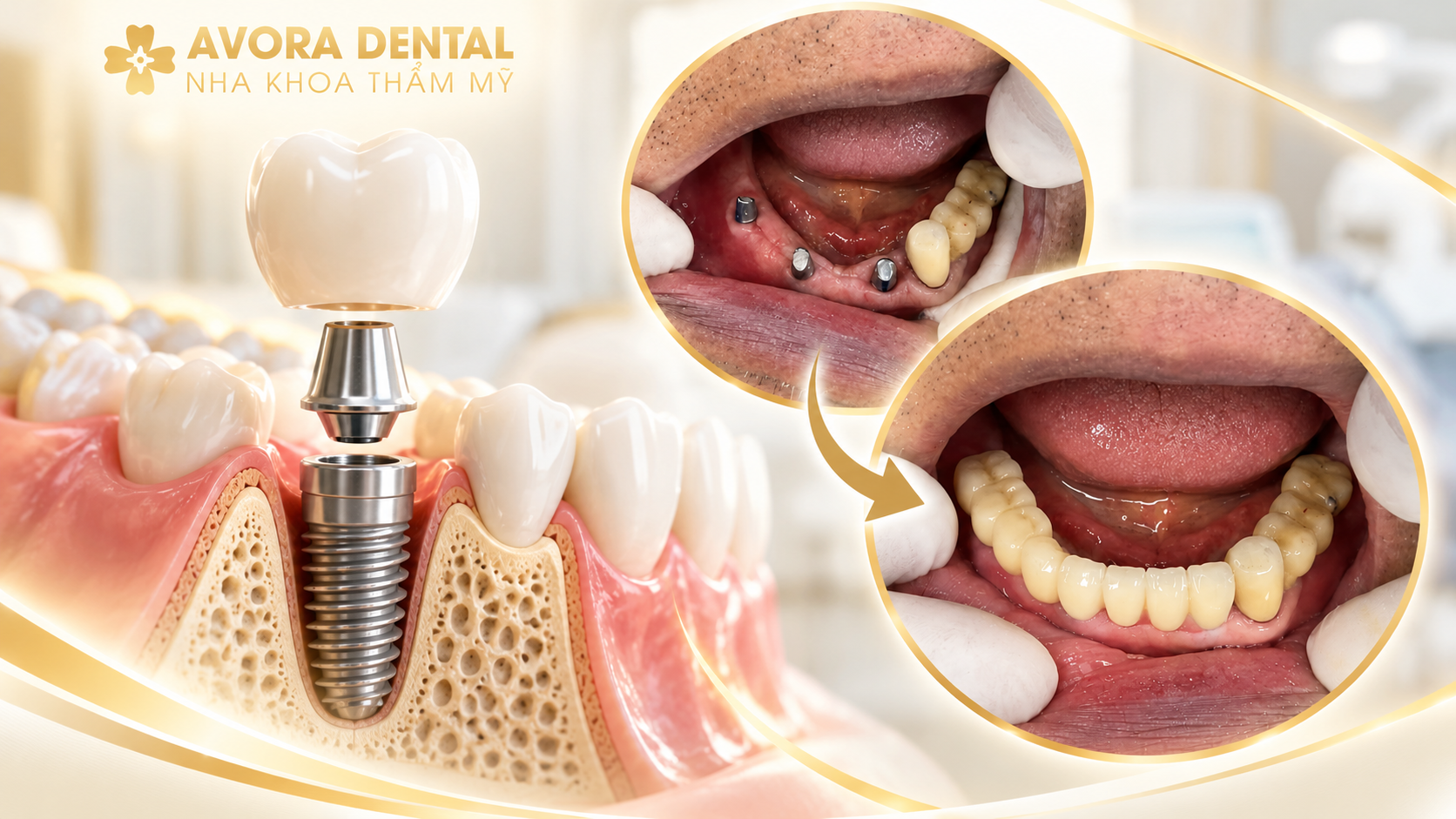
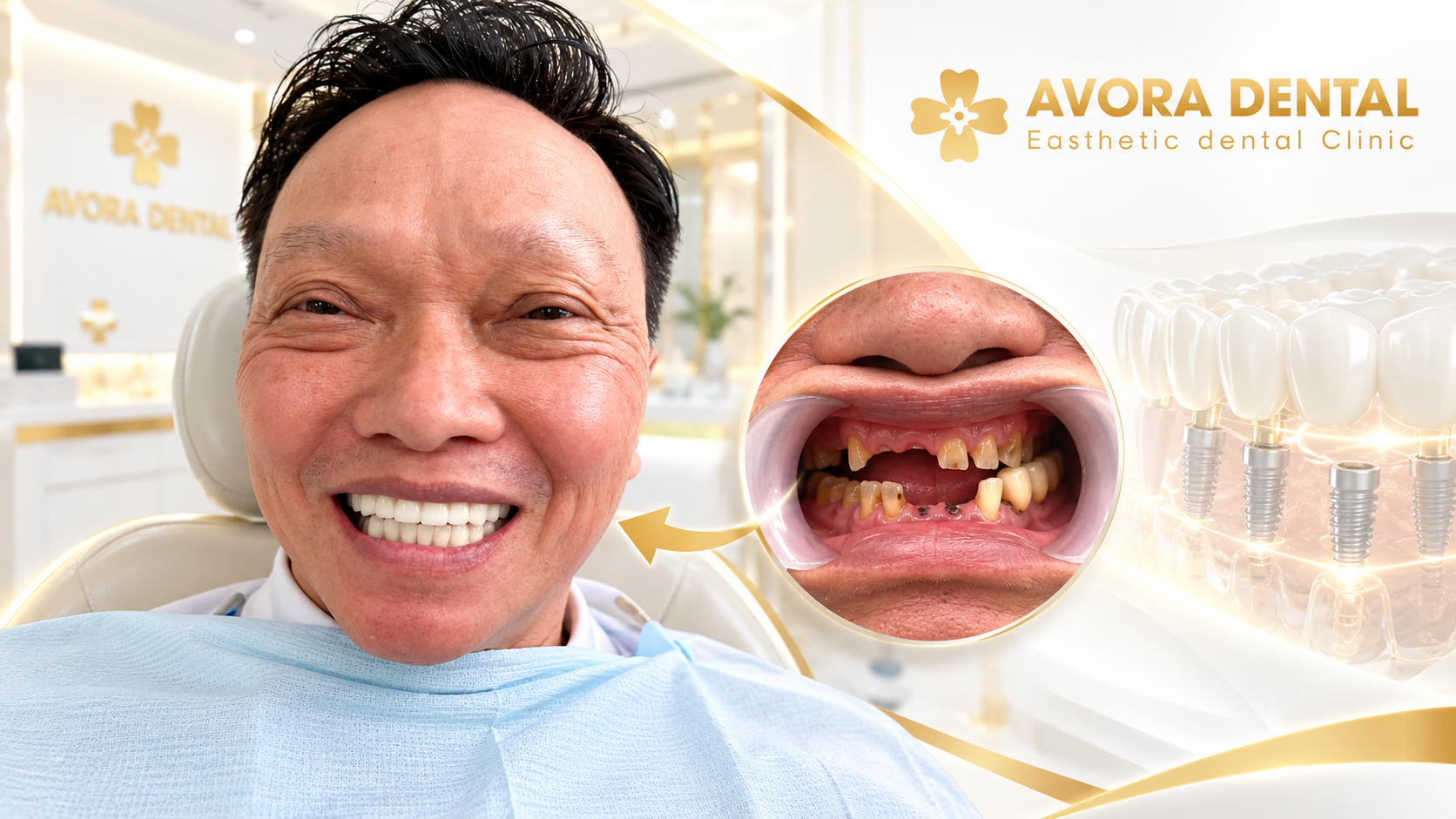
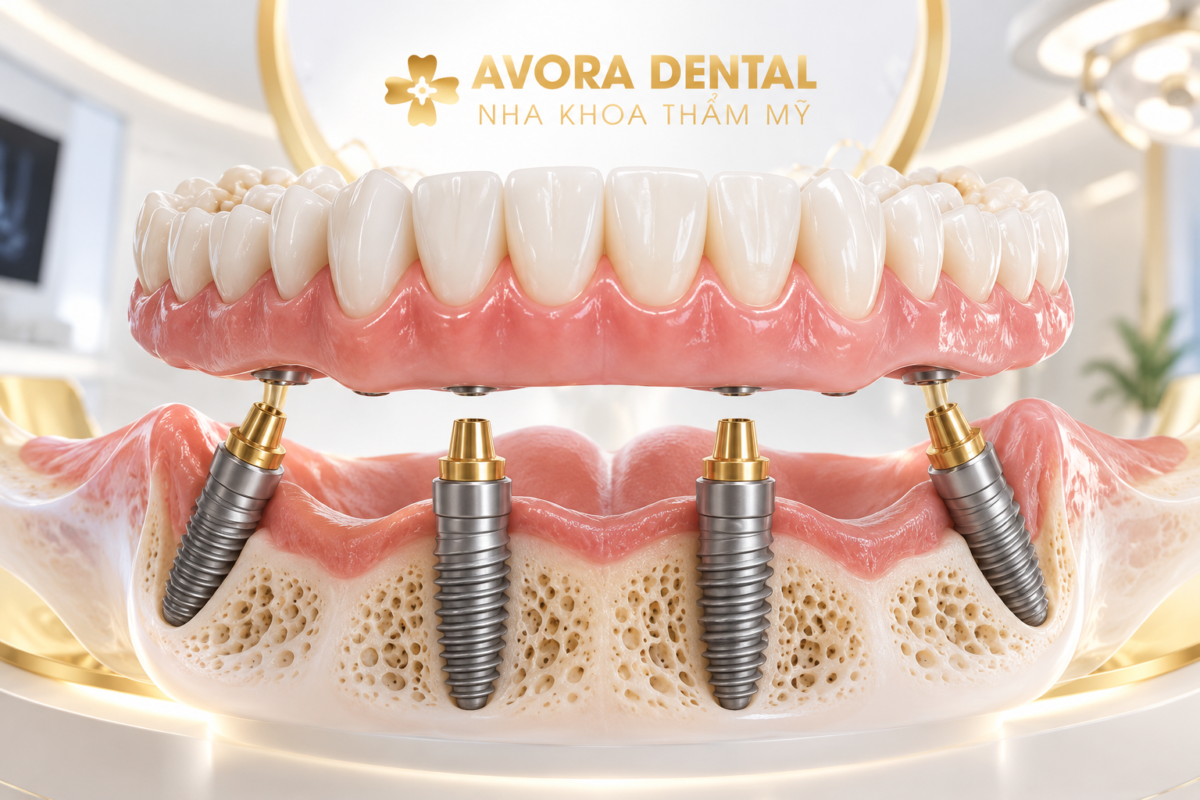
All-on-4 is a modern full-arch tooth restoration method that uses four dental implants to support a fixed set of teeth. It helps restore chewing function and improves aesthetics for individuals who have lost many or all of their natural teeth.
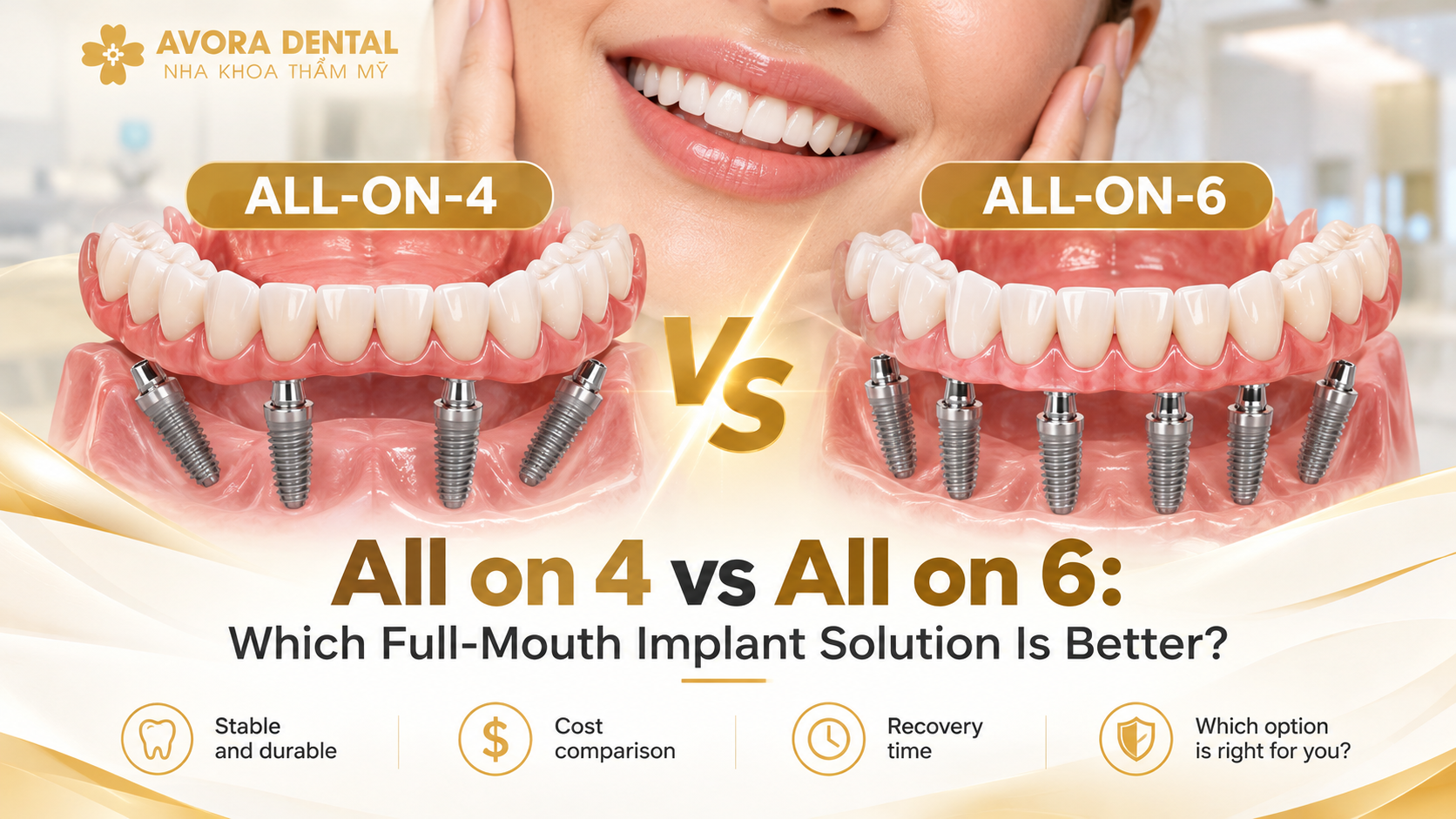
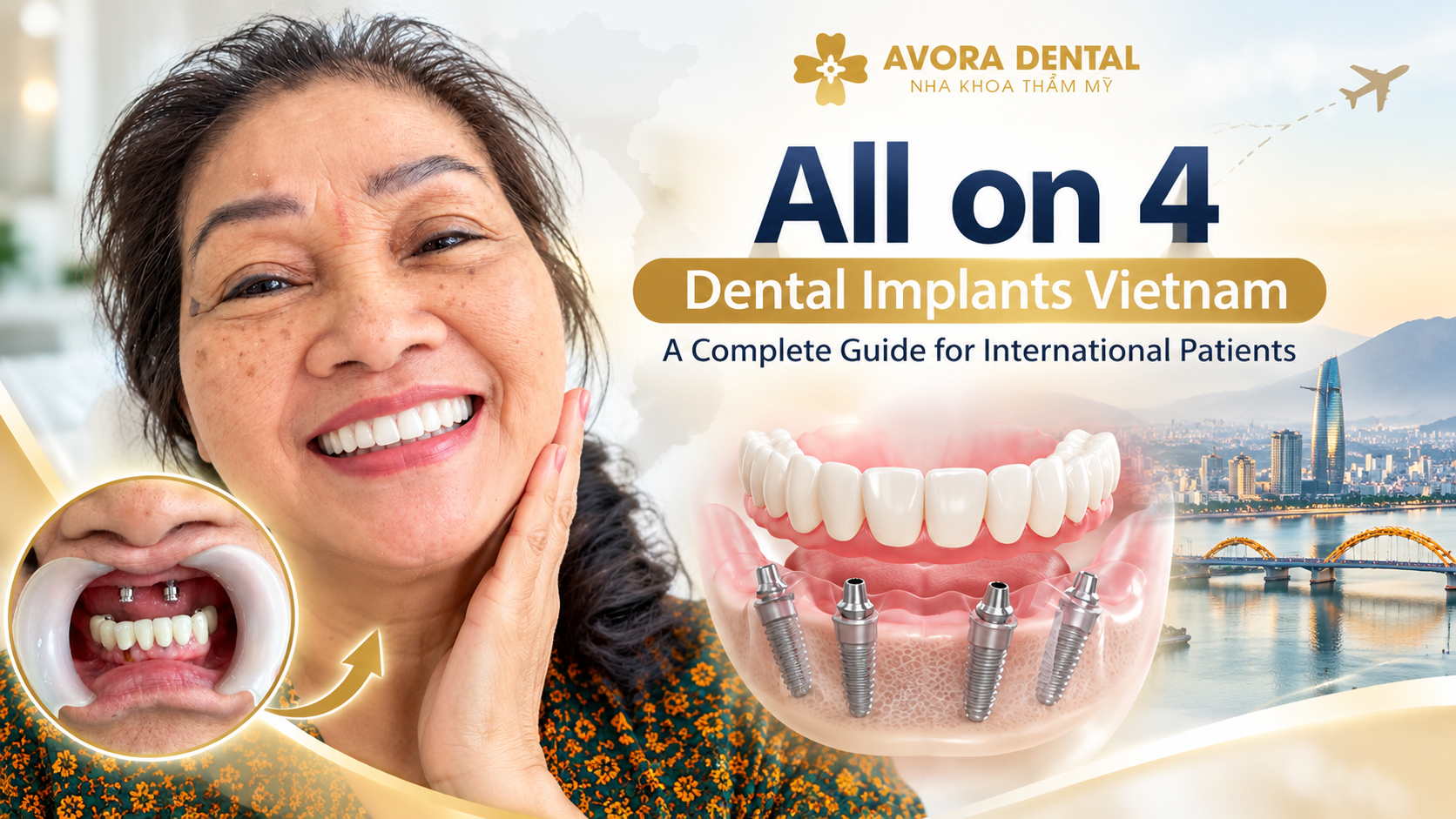
In this procedure, two implants are placed vertically in the anterior (front) region, while two implants are placed at an angle in the posterior (back) region to make the most of the existing jawbone. This technique can reduce the need for bone grafting in certain cases and streamlines the tooth restoration process.
Key Benefits of the All on 4 Procedure
The all on 4 procedure offers numerous advantages for individuals who have lost an entire arch of teeth, helping to improve both chewing function and the aesthetics of one’s smile.
– Full-arch restoration: Replaces an entire set of teeth using only 4 dental implants.
– Fixed, secure teeth: Provides greater stability and comfort compared to removable dentures.
– Optimized treatment process: Utilizes 4 implants placed in strategic positions to support the dental arch.
– Reduced need for bone grafting: May minimize the requirement for bone grafting procedures in certain cases.
– Improved chewing ability: Allows patients to eat with greater ease and confidence.
– Natural aesthetics: Restores a smile that is harmonious with the patient’s facial features.
Note: The All-on-4 technique is not suitable for everyone. Patients must undergo a professional examination and an assessment of their jawbone condition before proceeding with treatment.
All on 4 Procedure Step by Step: Understanding the Treatment Process
The 7-Step All-on-4 Implant Procedure
The All-on-4 Implant Procedure consists of 7 steps, ranging from the initial examination and treatment planning to the placement of dental implants and the final fixed restoration. Each stage is carefully managed by the dentist to ensure safety, aesthetic appeal, and long-term success.
- Step 1: Initial Examination and Consultation
The dentist assesses the patient’s oral health, including the condition of the gums and jawbone, and reviews their medical history. The patient may undergo X-rays or a **3D CBCT scan** to evaluate bone structure and determine the optimal placement for the implants.
At Avora Dental, this examination allows the dentist to develop a personalized treatment plan, with a focus on patient safety and long-term oral health.
- Step 2: All-on-4 Treatment Planning
Based on the examination results, the dentist determines the precise locations for the 4 dental implants, evaluates bone density and bite alignment, and designs the final prosthetic restoration.
The All-on-4 procedure is tailored to each individual patient, covering the treatment timeline, estimated costs, and the specific restorative approach.
- Step 3: Tooth Extraction and Jawbone Preparation
If a patient has severely damaged teeth that cannot be saved, the dentist will perform extractions and address any existing infections or inflammation prior to implant placement.
In some cases, tooth extraction and implant placement can be carried out during the same surgical session.
- Step 4: Surgical Placement of the 4 Dental Implants
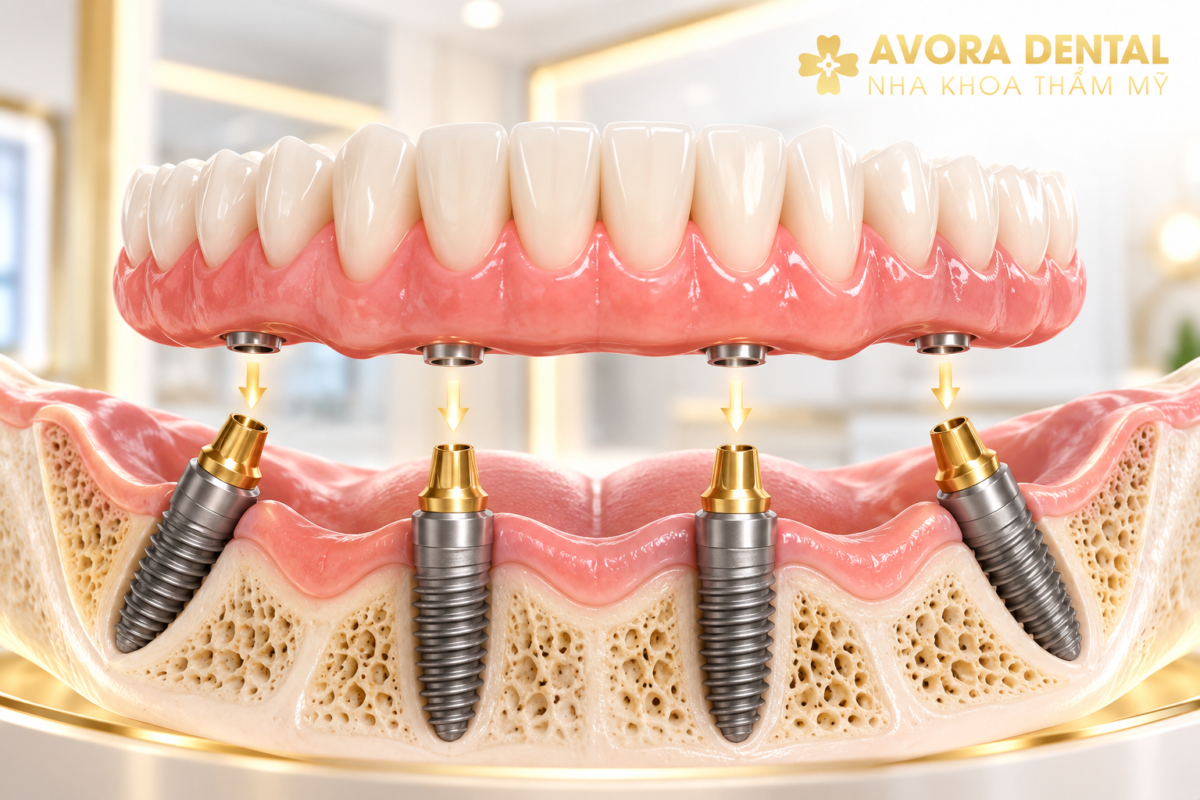
This is the most critical stage of the **All-on-4 procedure**. The dentist places 4 dental implants into the jawbone according to the established treatment plan:
The 2 anterior (front) implants:** These are placed vertically to provide a stable foundation for support. – **2 posterior implants:** These are typically placed at an angle to make the most of the existing jawbone.
The surgery is generally performed under local anesthesia, which helps minimize pain during the procedure.
- Step 5: Placement of temporary teeth
If the implants achieve sufficient primary stability, a **fixed temporary prosthesis** can be attached on the same day or shortly thereafter.
The temporary prosthesis helps maintain aesthetics and basic function during the healing period. However, immediate restoration is not suitable for every case.
- Step 6: Healing and osseointegration
Following the procedure, the implants require time to integrate with the jawbone—typically **3–6 months**, depending on the individual’s health and physiological response.
During this phase, patients must maintain proper oral hygiene, follow dietary guidelines, and attend scheduled follow-up appointments to ensure a smooth recovery.
- Step 7: Placement of the final fixed prosthesis
Once the implants have successfully integrated, the dentist will attach the final fixed prosthesis (such as a bridge) using appropriate materials, such as Zirconia or other specialized restorative systems.
The prosthesis is adjusted for bite (occlusion), shape, and color to ensure a **natural-looking smile, effective chewing function, and long-term comfort**.
Note: The duration and outcomes of the All-on-4 procedure may vary based on the condition of the jawbone, oral health, and the individual patient’s healing capacity.
How Long Does the All on 4 Procedure Take?
The overall timeline of the all on 4 procedure depends on the patient’s oral health and treatment complexity.
Although implant surgery may be completed during one surgical appointment, the entire restoration process typically involves multiple stages.
| Treatment Stage | Estimated Timeline |
|---|---|
| Initial consultation and examination | Usually 1 appointment |
| Diagnostic imaging and treatment planning | Often 1–2 appointments |
| Tooth extraction and implant placement | Commonly 1 surgical appointment |
| Temporary prosthesis | Same day or shortly afterward, if suitable |
| Implant healing and osseointegration | Approximately 3–6 months |
| Final prosthetic restoration | After adequate healing and clinical evaluation |
These estimates are general guidelines rather than guaranteed treatment schedules.
Some patients require additional procedures or longer healing periods.
For international patients traveling to Vietnam, understanding the complete treatment timeline is especially important when planning flights, accommodation, and return visits.
All on 4 Recovery: What Should Patients Expect?
The recovery period following All-on-4 implant surgery typically lasts about 3–6 months, allowing the dental implants to integrate with the jawbone. However, post-operative symptoms often improve much sooner, depending on the individual patient’s physical constitution and overall health.
- During the first 24–48 hours
Patients may experience mild swelling, soreness, or discomfort. It is recommended to rest, consume soft foods, take prescribed medications, and avoid strenuous physical activity, smoking, or alcohol consumption. - During the first week
Swelling and pain generally begin to subside. Patients should continue to follow a soft-food diet, practice gentle oral hygiene, and adhere to the post-operative care instructions provided by their dentist. - From the 2nd to the 6th week
Gum tissue continues to heal, while the dental implants begin the process of integrating with the jawbone (osseointegration). Avoid hard, chewy, or sticky foods to minimize pressure on the implant sites. - From the 3rd to the 6th month
The implants continue to integrate with the jawbone, establishing a solid foundation. Once the necessary stability is achieved, the dentist will proceed with the **placement of the final, permanent teeth**.
Note: It is essential for patients to attend all scheduled follow-up appointments to monitor the healing process and ensure any potential complications are identified early.
Who Is a Good Candidate for the All on 4 Procedure?
The All-on-4 procedure is a restorative solution suitable for adults who have lost many or all of their teeth, particularly in the following cases:
– Total tooth loss: Loss of most or all teeth in the upper or lower jaw.
– Severely damaged teeth: Many teeth that can no longer be saved.
– Difficulty using removable dentures: A desire for a fixed, stable, and more comfortable set of teeth.
– A need to improve chewing function and aesthetics: Seeking a long-term, full-arch restorative solution.
– Sufficient jawbone condition: Adequate bone structure to support the four dental implants.
Note: Not every patient is a suitable candidate for the All-on-4 technique. Individuals with periodontal disease, uncontrolled systemic health conditions, or those who smoke regularly require a thorough evaluation by a dentist before undergoing treatment.
All on 4 Procedure vs Traditional Dental Implants
Both All-on-4 and conventional dental implants can provide effective solutions for missing teeth.
However, they differ in treatment approach and clinical applications.
| Feature | All-on-4 Procedure | Traditional Dental Implants |
|---|---|---|
| Primary purpose | Full-arch restoration | Single-tooth, multiple-tooth, or full-arch replacement |
| Implant configuration | Typically four implants per arch | Varies according to treatment |
| Bone grafting | May be avoided in selected cases | May be necessary depending on anatomy |
| Temporary fixed teeth | Possible in suitable cases | Depends on implant stability and treatment design |
| Treatment planning | Full-arch prosthetic planning | Individualized according to missing teeth |
| Recovery | Depends on surgery and patient health | Depends on treatment complexity |
Neither approach is universally superior.
The most appropriate option depends on the patient’s anatomy, oral health, functional requirements, and long-term treatment goals.
How Successful Is the All on 4 Procedure?
Clinical research has reported favorable long-term outcomes for All-on-4 treatment in appropriately selected patients.
However, success rates vary between studies and depend on several factors, including patient selection, surgical technique, implant maintenance, and follow-up duration.
Patients should also understand the difference between implant survival and overall treatment success.
An implant may remain in place while complications affect the surrounding tissues or prosthetic restoration.
Potential complications include:
- Peri-implant inflammation.
- Implant failure.
- Prosthetic fractures or wear.
- Screw loosening.
- Bite-related complications.
- Difficulty maintaining oral hygiene.
For reliable information about dental implant care and maintenance, patients can explore educational resources from the American Academy of Periodontology.
Long-term success requires regular dental examinations, effective daily cleaning, and appropriate professional maintenance.
Why Consider the All on 4 Procedure in Vietnam?
Vietnam is increasingly becoming a preferred destination for international patients seeking dental care—particularly **All-on-4 dental implants**—offering both significant cost savings and the opportunity to combine medical treatment with travel.
However, when opting for **All-on-4 implants in Vietnam**, patients should carefully consider several key factors:
– Professional Expertise: The experience and competence of the dentists in performing implant procedures.
– Treatment Technology: The diagnostic and treatment planning processes, as well as the quality of the implant materials used.
– Transparent Pricing: Clear, upfront cost estimates to minimize unexpected expenses.
– Treatment Safety: Protocols for infection control and the management of potential complications.
– Post-operative Care: Ongoing support for follow-up visits and long-term monitoring.
Note: International patients should plan their stay accordingly and arrange for follow-up care, as the complete All-on-4 restoration process may require multiple appointments over the course of several months.
Understanding the All on 4 Procedure at Avora Dental
At Avora Dental, we believe informed patients are better prepared to make confident decisions about their oral health.
For international patients considering full-mouth restoration, understanding the all on 4 procedure helps clarify the treatment journey and establish realistic expectations.
A patient-centered consultation should address several important questions:
1. Am I a suitable candidate for All-on-4?
A comprehensive examination is necessary to determine whether the treatment is appropriate.
2. Will I need additional procedures?
Some patients may require tooth extractions, periodontal treatment, or bone-related procedures before implant placement.
3. Can I receive temporary teeth immediately?
Immediate temporary restoration depends on implant stability and individual clinical conditions.
4. How long will my treatment take?
The timeline depends on the surgical plan, healing response, and prosthetic requirements.
5. What follow-up care will I need?
Regular professional maintenance and effective daily oral hygiene are essential for long-term implant health.
Avora Dental encourages patients to discuss their treatment options, expectations, and concerns before proceeding with dental implant surgery.
Frequently Asked Questions About the All on 4 Procedure
1. Is the All on 4 Procedure Painful?
The all on 4 procedure is usually performed under local anesthesia to minimize discomfort during surgery.
Some swelling, tenderness, and bruising may occur afterward.
Pain levels vary between patients, and postoperative symptoms should be monitored carefully.
2. Can the All on 4 Procedure Be Completed in One Day?
In suitable cases, four implants and a fixed temporary restoration may be placed on the same day.
However, this does not mean the entire treatment is completed in one day.
Final prosthetic restoration generally takes place after sufficient healing and implant integration.
3. How Many Teeth Can Be Replaced With All-on-4?
The technique is designed to replace an entire dental arch using four implants.
The number of prosthetic teeth depends on the patient’s anatomy, bite, and restoration design.
4. How Long Do All-on-4 Dental Implants Last?
Dental implants can function for many years with appropriate care.
However, their lifespan depends on oral hygiene, general health, implant positioning, bite forces, and professional maintenance.
The prosthetic bridge may require repair or replacement over time.
5. Is the All on 4 Procedure Suitable for Older Adults?
Age alone does not determine implant eligibility.
Older adults may be suitable candidates when their oral health, bone condition, and overall medical status support treatment.
6. What Foods Can I Eat After the All on 4 Procedure?
Patients are generally advised to follow a soft-food diet during the initial healing period.
The duration of dietary restrictions depends on the treatment plan and the stability of the implants and temporary restoration.
Patients should follow their dentist’s specific recommendations before returning to harder foods.
Conclusion: Is the All on 4 Procedure Right for You?
The all on 4 procedure provides a modern approach to full-mouth dental restoration, offering selected patients an opportunity to replace missing teeth with a fixed implant-supported prosthesis.
From initial consultation and digital planning to implant placement, healing, and final restoration, every stage plays an important role in treatment outcomes.
Understanding the procedure helps patients prepare for surgery, recognize the importance of recovery, and establish realistic expectations.
For international patients considering dental implants in Vietnam, choosing an appropriately qualified dental team and receiving a comprehensive treatment plan are essential steps.
Considering All-on-4 Dental Implants in Vietnam?
Contact Avora Dental to discuss your oral health, explore treatment options, and learn about the steps involved in a full-arch restoration procedure. A professional consultation will help determine whether the All-on-4 treatment is the right solution for your specific needs.
Medical Disclaimer: This article is for informational purposes only and does not constitute professional dental advice, diagnosis, or treatment tailored to an individual. Treatment outcomes and duration may vary from person to person.