Discover the complete full mouth implant recovery timeline, including healing stages, recovery tips, diet recommendations, and what international patients can expect after full mouth dental implants in Vietnam.
Full Mouth Implant Recovery Timeline: What to Expect After Full Mouth Dental Implants
For patients considering full mouth dental implants, one of the most common questions is: “How long does recovery take?” Understanding the full mouth implant recovery process helps patients plan their travel, work schedule, and expectations more realistically.
The good news is that modern implant techniques have significantly improved healing times, allowing many patients to return to normal activities much faster than they expect. However, the complete full mouth implant recovery journey occurs in several stages, each playing an important role in achieving long-term success.
This guide explains exactly what happens during each phase of recovery and what international patients traveling to Vietnam should expect.

Full Mouth Implant Recovery at a Glance
Patients searching for information about full mouth implant recovery typically want quick answers:
• Most patients return to light activities within 2 to 3 days.
• Swelling and discomfort usually improve significantly after 7 to 10 days.
• Initial gum healing takes approximately 2 weeks.
• Dental implants generally require 3 to 6 months to fully integrate with the jawbone.
• Temporary teeth can often be placed immediately or within a few days depending on the treatment plan.
• Final permanent prosthetics are usually delivered after complete healing and implant integration.
Although each patient’s recovery differs, understanding these stages makes the entire process less stressful and more predictable.
Day 1: The First 24 Hours After Surgery
The first day is the most important period of full mouth implant recovery.
Patients commonly experience:
• Mild to moderate discomfort
• Swelling around the cheeks and jaw
• Minor bleeding or oozing
• Difficulty chewing
• Temporary speech adjustments
Most discomfort is easily controlled with prescribed medication and cold compresses.
During the first 24 hours, patients should:
• Rest as much as possible
• Avoid strenuous activities
• Avoid smoking and alcohol
• Consume only soft or liquid foods
• Keep the head elevated while sleeping
For international patients receiving treatment in Vietnam, many clinics recommend staying near the clinic for easy follow-up visits during this stage.
Days 2 to 7: Managing Swelling and Discomfort
The second to seventh day represents the period when swelling reaches its peak.
This stage of full mouth implant recovery often worries patients unnecessarily because facial swelling can look dramatic despite being completely normal.
Typical symptoms include:
• Facial swelling
• Mild bruising
• Tightness around the cheeks
• Tender gums
• Difficulty opening the mouth fully
Most patients report that discomfort begins improving after the third day.
Helpful recovery tips include:
• Applying ice packs during the first 48 hours
• Staying hydrated
• Taking medication exactly as prescribed
• Avoiding hot or spicy foods
• Sleeping with extra pillows
By the end of the first week, many patients feel comfortable enough to enjoy sightseeing and light activities around Ho Chi Minh City.
Week 2: Returning to Daily Activities
By the second week, the majority of visible swelling has disappeared.
This stage of full mouth implant recovery is when many patients begin feeling more confident socially and professionally.
Patients can typically:
• Return to work
• Resume light exercise
• Speak more naturally
• Increase food variety
• Travel comfortably
The gums continue healing beneath the surface even if everything appears normal externally.
Most follow-up appointments occur during this stage to evaluate healing progress.
Weeks 3 to 8: The Hidden Healing Phase
One of the biggest misconceptions about full mouth implant recovery is believing recovery ends once discomfort disappears.
In reality, this period is when the most important biological process occurs: osseointegration.
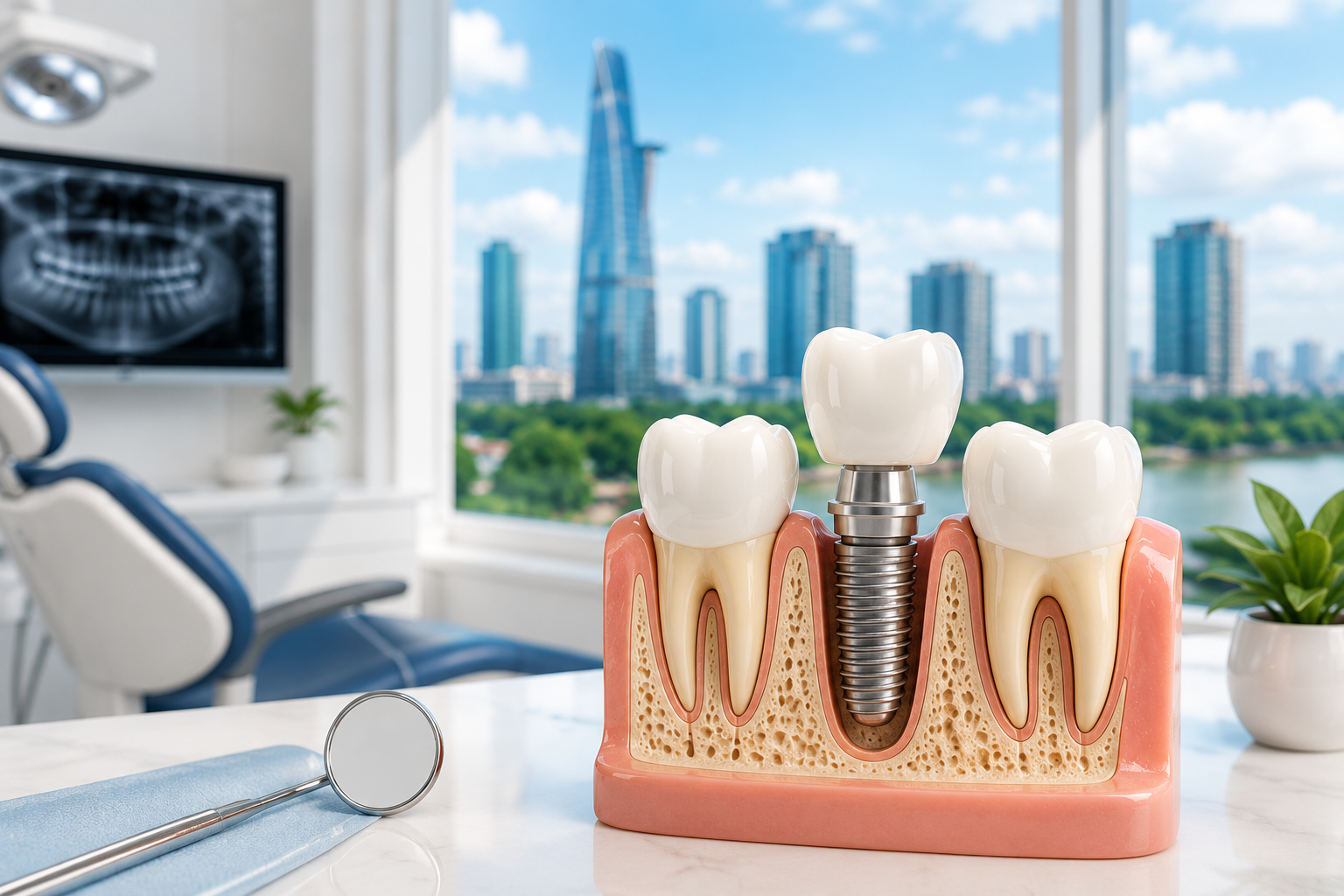
Osseointegration is the process where the jawbone fuses directly with the titanium implants, creating a stable and permanent foundation for replacement teeth.
Patients generally feel completely normal during this stage, but implant stability continues improving every week.
To protect healing implants, patients should continue avoiding:
• Smoking
• Excessive alcohol consumption
• Extremely hard foods
• Teeth grinding habits
Following these recommendations dramatically increases long-term implant success.
Months 3 to 6: Final Implant Integration
For most patients, complete full mouth implant recovery takes between three and six months.
Several factors influence healing speed:
• Bone quality
• Overall health
• Age
• Smoking status
• Presence of diabetes
• Oral hygiene habits
Patients with healthy lifestyles often heal more quickly.
Once implant integration is confirmed through clinical examinations and imaging, permanent restorations can be fabricated.
This marks the final stage of treatment and provides the aesthetics and functionality patients have been waiting for.
What Foods Can You Eat During Full Mouth Implant Recovery?
Diet plays a major role in successful full mouth implant recovery.
First 48 Hours
Recommended foods include:
• Smoothies
• Yogurt
• Soup
• Protein shakes
• Mashed potatoes
First Two Weeks
Patients can gradually introduce:
• Scrambled eggs
• Pasta
• Rice
• Fish
• Soft vegetables
After One Month
Most patients can comfortably eat:
• Chicken
• Bread
• Soft fruits
• Cooked meats
Hard foods such as nuts, ice, and hard candy should be avoided until your dentist confirms implant stability.
How Painful Is Full Mouth Implant Recovery?
This is perhaps the question patients ask most frequently.
Interestingly, many patients report that full mouth implant recovery is easier than expected.
Modern techniques, digital planning, and minimally invasive procedures have transformed implant surgery significantly.
Patients often describe recovery discomfort as:
• Less painful than tooth extractions
• Similar to having multiple teeth removed
• Manageable with medication
• Noticeably improved after three days
Severe pain is uncommon and should always be reported to your dental team immediately.
How Long Should International Patients Stay in Vietnam?
Travel planning is essential for overseas patients undergoing treatment.
Most international patients receiving full mouth implants follow one of two schedules:
Immediate Loading Protocol
Stay in Vietnam for approximately:
7 to 10 days
This allows time for surgery, healing observation, and placement of temporary teeth.
Traditional Implant Protocol
First trip:
7 to 10 days for surgery.
Second trip:
5 to 7 days after healing for final restorations.
Your dentist will determine the most suitable timeline based on bone quality and treatment complexity.
Tips for Faster Full Mouth Implant Recovery
Patients can improve their full mouth implant recovery by following several simple guidelines:
Maintain excellent oral hygiene.
Follow all medication instructions carefully.
Avoid smoking entirely.
Attend every follow-up appointment.
Consume a balanced, protein-rich diet.
Stay hydrated.
Get adequate sleep.
These habits support both soft tissue healing and bone integration.
Why Vietnam Is Becoming a Popular Destination for Full Mouth Implants
Vietnam has become one of Asia’s leading destinations for implant dentistry thanks to:
• Internationally trained dentists
• Modern digital technology
• Significantly lower treatment costs
• Short waiting times
• High-quality patient care
Many international patients combine treatment with a holiday experience while enjoying world-class dental services.
At Avora Dental, international patients also benefit from additional travel support to make their experience more comfortable and convenient.
During July and August, patients with dental treatment plans valued at USD $4,000 or more can enjoy a complimentary 4-star hotel stay for 5 days and 4 nights, making dental tourism in Vietnam even more attractive.
Useful Resources About Full Mouth Implant Recovery
Patients who want to learn more about the science behind full mouth implant recovery may find these resources helpful:
• The American Academy of Implant Dentistry (AAID) provides evidence-based information about implant procedures, healing stages, and long-term implant maintenance. AAID is one of the oldest implant organizations in the world and has been advancing implant dentistry since 1951.
• The International Team for Implantology (ITI) publishes clinical guidelines and research related to implant healing, osseointegration, and implant success rates. ITI is widely recognized as a leading authority in implant education and research.
• The International Congress of Oral Implantologists (ICOI) offers educational resources for both clinicians and patients interested in modern implant treatment options.
• Patients interested in understanding how titanium implants integrate with bone can explore information about osseointegration from the American Board of Oral Implantology (ABOI) and other implant organizations that focus on evidence-based treatment standards.
• For general oral health advice during the full mouth implant recovery period, international patients can also refer to:
- Mayo Clinic Oral Health Resources
- NHS Healthy Teeth and Gums Guide
- National Institute of Dental and Craniofacial Research (NIDCR)
Final Thoughts
Understanding the full mouth implant recovery timeline helps patients prepare both physically and mentally for treatment.
Although complete healing typically requires several months, most patients return to comfortable daily activities within just one to two weeks.
With proper planning, experienced clinicians, and good post-operative care, full mouth implants offer one of the most life-changing and long-lasting solutions in modern dentistry.
For patients researching treatment options in Vietnam, learning about recovery expectations is often the first step toward restoring confidence, oral health, and quality of life.