
Delaying missing tooth replacement can lead to bone loss, shifting teeth, bite problems, and more expensive treatment later. Learn why replacing a missing tooth early protects your smile and oral health.
When people lose a tooth, many assume it is only a cosmetic issue. If the missing tooth is located at the back of the mouth and cannot be seen while smiling, some patients postpone treatment for months or even years. However, dentists consistently recommend early missing tooth replacement because the consequences of waiting are often more serious than people realize.
A missing tooth affects far more than appearance. It can change your bite, weaken your jawbone, increase treatment costs, and even impact your overall health. Understanding the risks of delaying treatment can help you make a better decision for your long-term wellbeing.
Quick Answer: How Long Can You Wait Before Replacing a Missing Tooth?
Ideally, patients should consider missing tooth replacement as soon as the extraction site has healed or immediately after losing a tooth if emergency treatment is possible.
The longer a tooth remains missing, the greater the risk of:
• Jawbone deterioration
• Movement of neighboring teeth
• Bite misalignment
• Difficulty chewing certain foods
• Increased pressure on remaining teeth
• More complicated and expensive treatment in the future
For many patients, waiting just six to twelve months can already result in noticeable bone loss.
What Happens After You Lose a Tooth?
Your teeth exist in balance with one another. Every tooth helps support neighboring teeth and maintains proper chewing function.
Once a tooth disappears, the body immediately begins adapting to the empty space.
Jawbone Starts Shrinking
One of the biggest concerns following tooth loss is bone resorption.
Your jawbone relies on stimulation from tooth roots during chewing. Without this stimulation, the body assumes the bone is no longer needed and gradually begins to remove it.
Research from organizations such as National Institute of Dental and Craniofacial Research shows that bone loss can begin shortly after tooth extraction and continue for years if the missing tooth is not replaced.
This is one of the main reasons dentists strongly encourage early missing tooth replacement.
Nearby Teeth Begin to Shift
Teeth naturally move toward empty spaces.
Over time, neighboring teeth start leaning into the gap while opposing teeth may grow longer because they no longer meet resistance during biting.
This movement can lead to:
• Crooked teeth
• Bite problems
• Difficulty cleaning between teeth
• Increased risk of decay and gum disease
Eventually, orthodontic treatment may become necessary before tooth replacement can even begin.
Chewing Efficiency Decreases
Every tooth plays a role in chewing food effectively.
Patients missing molars often unconsciously shift chewing to one side of the mouth. This creates uneven pressure on the remaining teeth and jaw muscles.
Over time, this may contribute to:
• Tooth wear
• Muscle fatigue
• Jaw discomfort
• Digestive problems due to poorly chewed food
Can Missing Teeth Affect Facial Appearance?
Yes.
Many patients are surprised to discover that untreated tooth loss can alter facial structure.
The jawbone supports facial muscles and soft tissue. As bone volume decreases, the face may begin to look:
• Older
• Sunken
• Less symmetrical
• More wrinkled around the mouth
This effect is especially noticeable in patients who have multiple missing teeth or complete tooth loss.
Early missing tooth replacement helps preserve facial support and maintain a youthful appearance.
What Are the Best Missing Tooth Replacement Options?
The ideal solution depends on the number of missing teeth, bone condition, budget, and long-term goals.
Dental Implants
Dental implants are widely considered the gold standard for missing tooth replacement.
Benefits include:
• Prevent bone loss
• Look and function like natural teeth
• Do not affect neighboring teeth
• Can last decades with proper care
Because implants replace both the tooth root and crown, they provide stimulation to the jawbone that other options cannot offer.
According to the American Academy of Implant Dentistry, millions of dental implants are successfully placed worldwide each year.
Dental Bridges
A bridge replaces one or several missing teeth by attaching an artificial tooth to neighboring teeth.
Advantages include:
• Faster treatment time
• Lower initial cost
• Good aesthetic results
However, bridges do not prevent bone loss because they do not replace the tooth root.
Dentures
Partial dentures remain an affordable missing tooth replacement solution for patients missing multiple teeth.
Modern dentures are more comfortable than older designs and can significantly improve chewing ability and appearance.
However, they may require adjustments over time as the jawbone changes shape.
Is It More Expensive to Wait?
In many cases, yes.
Patients often postpone treatment to save money, but delaying missing tooth replacement frequently increases total costs.
For example:
A patient who receives an implant shortly after extraction may only require implant surgery and a crown.
A patient who waits several years may additionally require:
• Bone grafting
• Sinus lifting procedures
• Orthodontic treatment
• Gum treatment
The final investment can become substantially higher than if treatment had started earlier.
Who Is Most at Risk of Delaying Treatment?
You should consider immediate consultation if you:
• Recently lost a tooth due to trauma
• Had a tooth extracted because of infection
• Have difficulty chewing
• Notice neighboring teeth moving
• Feel embarrassed when smiling
• Have missing front teeth
Even if your missing tooth is not visible, replacing it early protects your oral health for years to come.
Why International Patients Choose Vietnam for Missing Tooth Replacement
Vietnam has become one of Asia’s leading destinations for dental tourism.
International patients are increasingly choosing Vietnam because of:
• Significant cost savings compared with Australia, New Zealand, the United States, and Canada
• Modern dental technology
• Internationally trained dentists
• Short waiting times
• Opportunities to combine treatment with travel
Many patients can save between 50% and 70% on implant treatment while receiving high-quality care.
Organizations such as the World Health Organization continue to emphasize the importance of maintaining oral health as part of overall wellbeing and quality of life.
Missing Tooth Replacement at Avora Dental
At Avora Dental, we understand that losing a tooth affects more than just your smile.
Our team provides personalized treatment plans designed specifically for international patients seeking long-lasting missing tooth replacement solutions.
Depending on your situation, treatment options may include:
• Single dental implants
• Implant bridges
• Full arch implant solutions
• Implant-supported dentures
We focus on preserving bone, restoring function, and delivering natural-looking results that help patients smile confidently again.
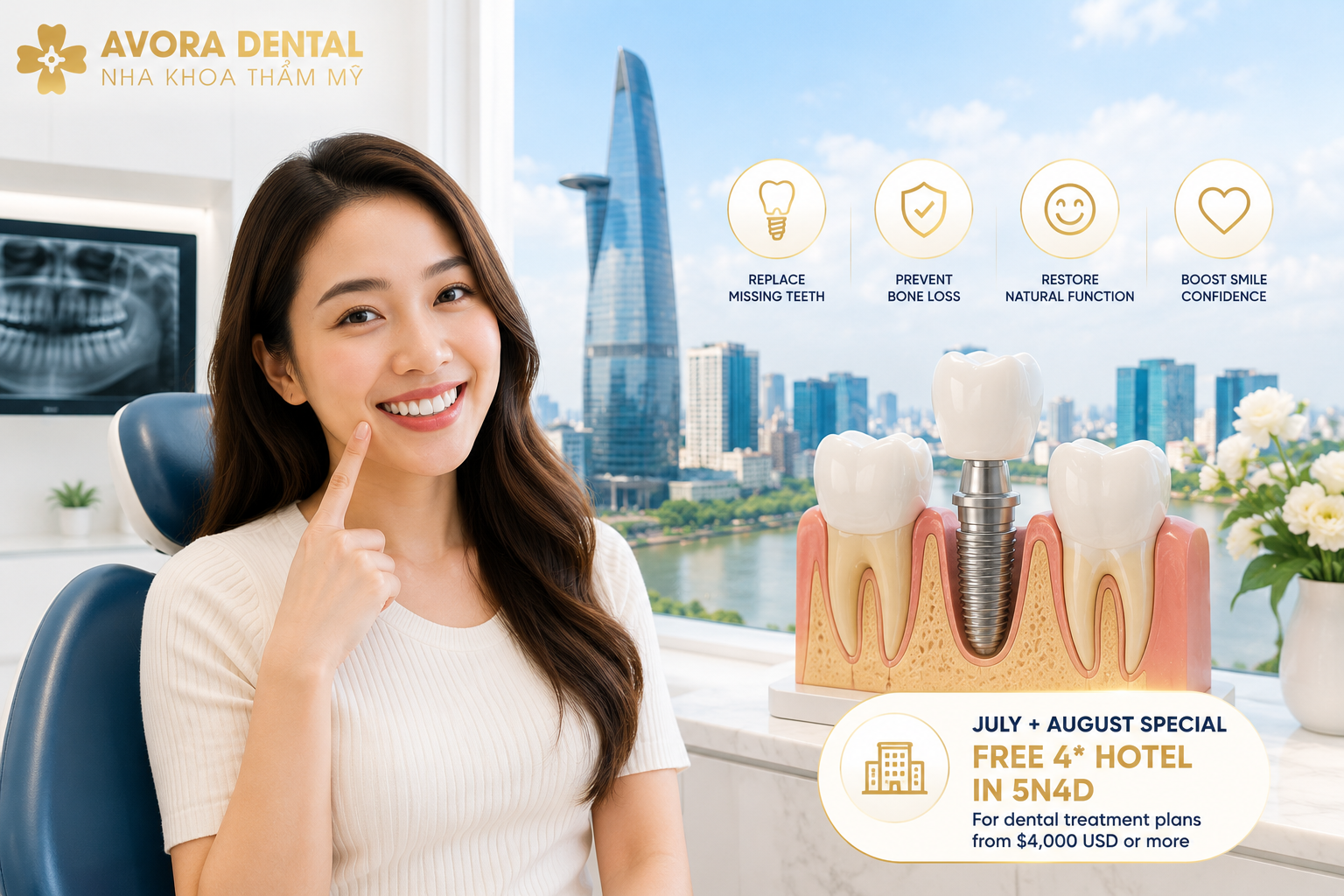
For overseas visitors planning dental treatment in Vietnam, we are currently offering our July and August promotion:
Free 4-star hotel accommodation for 5 days and 4 nights for patients with dental treatment plans valued at $4,000 USD or more.
This program helps international patients enjoy a more comfortable and convenient dental journey while receiving treatment in Ho Chi Minh City.
Frequently Asked Questions
Is replacing a missing tooth really necessary?
Yes. Even one missing tooth can affect chewing, neighboring teeth, jawbone health, and facial appearance.
What is the best option for missing tooth replacement?
Dental implants are generally considered the most effective long-term solution because they replace both the root and visible tooth.
How soon after extraction can I get treatment?
Some patients qualify for immediate implant placement, while others may require healing time first. A consultation and scan can determine the best timing.
Am I too old for dental implants?
Age alone is rarely a limitation. Many patients in their sixties, seventies, and even eighties successfully receive implant treatment.
Final Thoughts
Delaying missing tooth replacement may seem harmless initially, but the consequences often become more serious and more expensive over time.
Bone loss, shifting teeth, chewing difficulties, and facial changes can begin sooner than many patients expect.
The good news is that modern dentistry offers reliable and predictable solutions for replacing missing teeth and restoring quality of life.
If you have recently lost a tooth or have been living with missing teeth for years, seeking professional advice early can protect your oral health and provide more treatment options in the future.