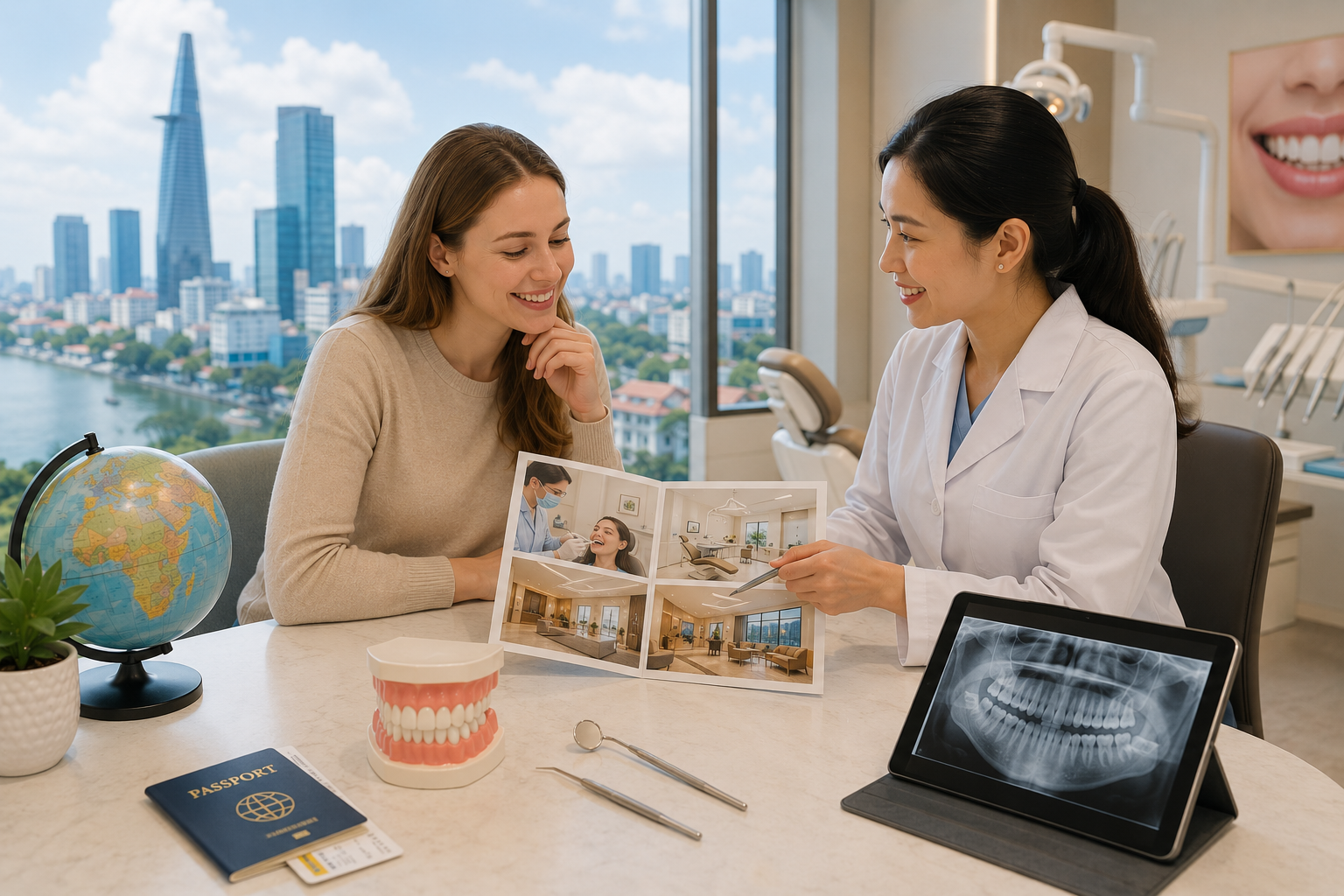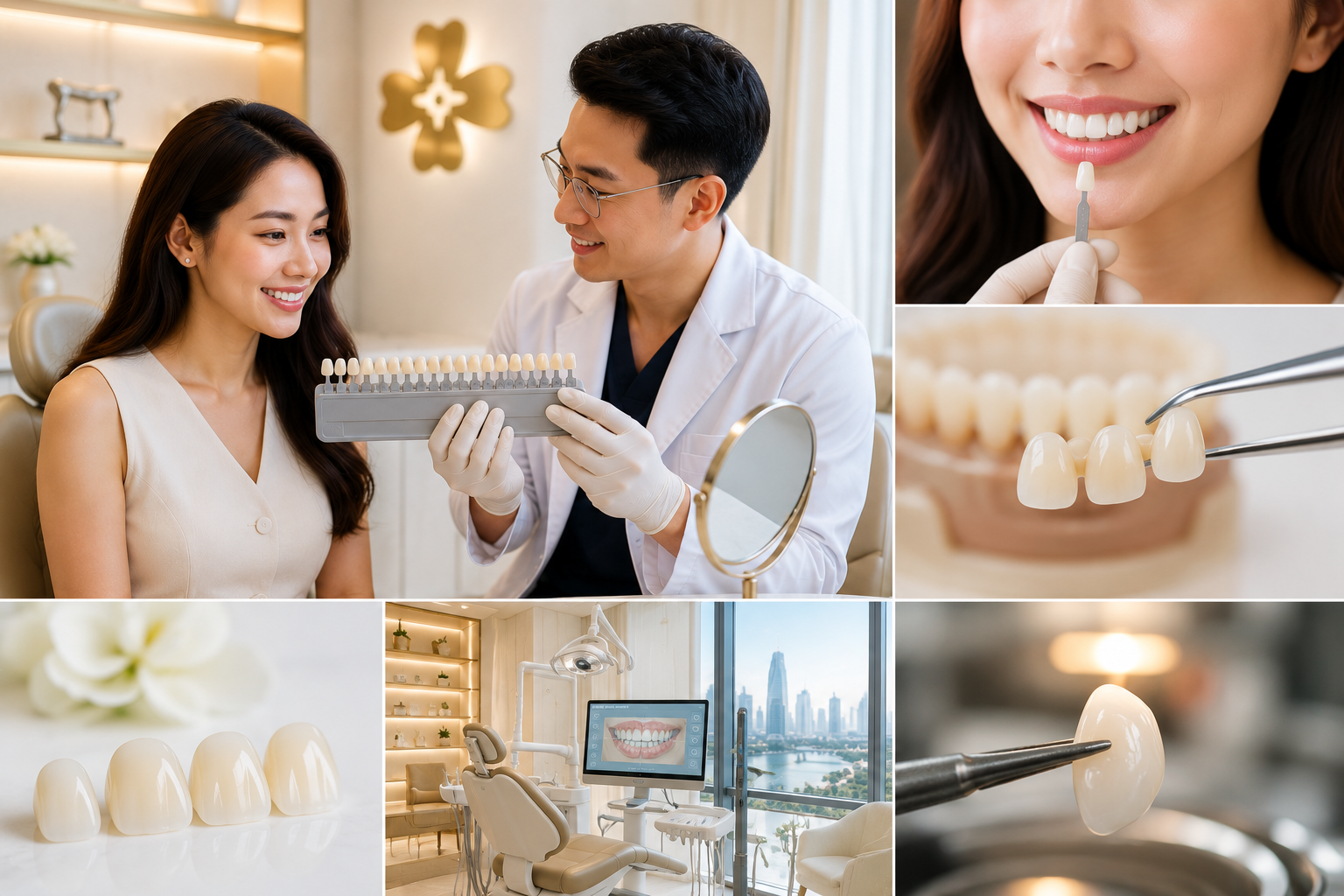
Wondering about composite vs porcelain veneers in Vietnam? Discover the key differences in cost, durability, aesthetics, and which option is best for your smile at Avora Dental.
Composite vs Porcelain Veneers in Vietnam: Understanding Your Best Smile Upgrade
If you’re considering a smile makeover, one of the biggest questions patients ask is: composite vs porcelain veneers in Vietnam — which one is better?
Vietnam has become one of the top destinations for cosmetic dentistry thanks to its affordable prices, skilled dentists, and modern dental technology. At Avora Dental, many international patients compare composite and porcelain veneers before making their final decision.
While both options improve your smile, they are very different in terms of cost, lifespan, aesthetics, and maintenance. Choosing the right one depends on your goals, budget, and long-term expectations.
In this guide, we’ll break down everything you need to know about composite vs porcelain veneers in Vietnam so you can make the best decision.
What Are Composite Veneers?
Composite veneers are made from tooth-colored resin, the same material used in dental fillings. The dentist sculpts the material directly onto your teeth and shapes it in one appointment.
Benefits of Composite Veneers:
- Lower upfront cost
- Faster treatment (often same-day)
- Minimal tooth preparation
- Easier repairs if chipped
Composite veneers are popular among patients who want a quick and budget-friendly smile enhancement.
According to the American Dental Association, composite resin is widely used for cosmetic bonding due to its flexibility and conservative nature.
What Are Porcelain Veneers?
Porcelain veneers are thin ceramic shells custom-made in a dental lab and bonded to the front of your teeth.
They are known for their premium aesthetics and long-lasting durability.
Benefits of Porcelain Veneers:
- More natural appearance
- Highly stain-resistant
- Stronger than composite
- Longer lifespan
- Better translucency
Porcelain veneers are considered the gold standard in cosmetic dentistry.
The American Academy of Cosmetic Dentistry states that porcelain veneers offer superior long-term cosmetic outcomes.
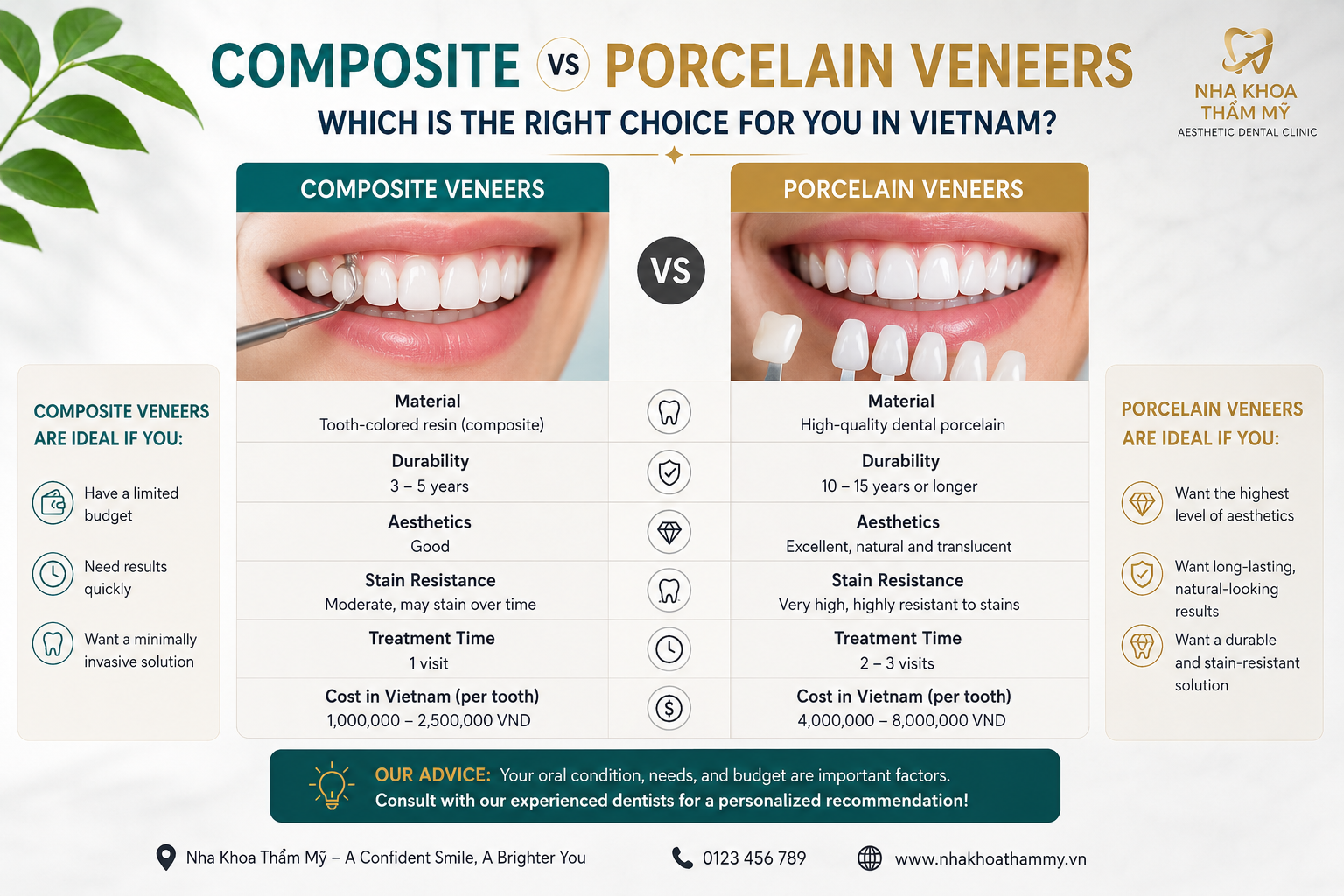
Composite vs Porcelain Veneers in Vietnam: Main Differences
When comparing composite vs porcelain veneers in Vietnam, here are the most important factors:
1. Cost
This is often the first thing patients look at.
At Avora Dental:
- Composite veneers: $80 – $150 per tooth
- Porcelain veneers: $250 – $400 per tooth
For a full smile makeover (16–20 teeth):
- Composite: around $1,500 – $3,000
- Porcelain: around $4,500 – $8,000
If your budget is limited, composite may seem more attractive. However, long-term costs should also be considered.
This is one of the biggest deciding factors in the composite vs porcelain veneers in Vietnam debate.
2. Appearance
Porcelain veneers win when it comes to aesthetics.
Why?
Because porcelain reflects light similarly to natural enamel. This creates a realistic, translucent look that composite resin cannot fully replicate.
Composite veneers can still look beautiful, but they may appear flatter or less vibrant over time.
If you want a Hollywood-level smile, porcelain is usually the better choice.
3. Durability
A major difference in composite vs porcelain veneers in Vietnam is lifespan.
Average durability:
- Composite veneers: 4–7 years
- Porcelain veneers: 10–20 years
Porcelain is harder, stronger, and less likely to chip.
Composite resin is softer and can wear down faster, especially if you grind your teeth.
Research published by PubMed shows porcelain restorations generally have a significantly longer survival rate.
4. Stain Resistance
If you drink coffee, tea, or wine regularly, this matters.
Composite resin is porous and absorbs stains over time.
Porcelain is non-porous and highly stain-resistant.
This means porcelain veneers maintain their bright white appearance much longer.
For international patients investing in cosmetic dentistry, this is a big advantage.
5. Treatment Time
Composite veneers are faster.
Typical timeline:
Composite Veneers:
- Consultation
- Tooth preparation
- Direct application
- Final polishing
Total: 1 day
Porcelain Veneers:
- Consultation
- Tooth preparation
- Digital scan
- Temporary veneers
- Final bonding
Total: 3–5 days
If you’re visiting Vietnam for a short trip, timing can influence your choice in the composite vs porcelain veneers in Vietnam comparison.
6. Tooth Preparation
Composite veneers are less invasive.
In many cases, little to no enamel removal is needed.
Porcelain veneers usually require some enamel reduction to ensure proper fit.
This makes composite a more conservative option.
Who Should Choose Composite Veneers?
Composite may be right for you if:
✅ You have a smaller budget
✅ You want quick results
✅ You need minor cosmetic corrections
✅ You want minimal enamel removal
✅ You’re testing veneers before committing long-term
At Avora Dental, many younger patients choose composite as their first cosmetic upgrade.
Who Should Choose Porcelain Veneers?
Porcelain may be better if:
✅ You want the best aesthetic result
✅ You want long-lasting durability
✅ You drink staining beverages often
✅ You want a full smile makeover
✅ You’re willing to invest more upfront
For many international dental tourists, porcelain is the preferred option when evaluating composite vs porcelain veneers in Vietnam.
Why Patients Choose Vietnam for Veneers
Vietnam offers world-class cosmetic dentistry at 60–80% lower prices compared to countries like the US, Australia, and the UK.
For example:
In the US:
- Composite veneers: $250–$600 per tooth
- Porcelain veneers: $900–$2,500 per tooth
In Vietnam:
- Composite veneers: $80–$150
- Porcelain veneers: $250–$400
This huge price difference makes Vietnam a popular destination for dental tourism.
Learn more from Patients Beyond Borders, a leading dental tourism resource.
Why Choose Avora Dental?
At Avora Dental, we help patients choose the right veneer option based on their smile goals—not just budget.
What makes us different?
- Advanced smile design technology
- International-standard sterilization
- English-speaking dental team
- Transparent pricing
- High-quality porcelain systems
- Personalized veneer planning
Whether you’re comparing composite vs porcelain veneers in Vietnam, our team provides honest recommendations based on your needs.
We believe the best veneer choice is the one that matches your lifestyle, expectations, and oral health.
Final Verdict: Composite vs Porcelain Veneers in Vietnam
So, in the end, who wins in composite vs porcelain veneers in Vietnam?
Choose composite veneers if you want:
- Lower cost
- Faster treatment
- Less invasive procedures
Choose porcelain veneers if you want:
- Better aesthetics
- Longer lifespan
- More stain resistance
- Stronger materials
For most patients seeking a long-term smile transformation, porcelain is often the better investment.
But if you’re looking for affordability and flexibility, composite can still deliver excellent results.
The best way to decide? Book a consultation at Avora Dental and let our experts assess your smile.
Your perfect smile starts with the right choice.