Considering dental implants before travel? Learn whether getting implants before your trip is the right decision, including timing, healing, risks, and expert advice for international patients.
Traveling abroad for work, holidays, or dental tourism often raises an important question: should you get dental implants before you travel, or should you wait until after your trip? The answer depends on several factors, including your oral health condition, treatment timeline, destination, and travel plans.
For many international patients, especially those considering dental tourism in Vietnam, understanding the pros and cons of dental implants before travel can help avoid complications and improve treatment outcomes. This guide answers the most common questions patients ask before making a decision.
What Does “Dental Implants Before Travel” Mean?
The phrase dental implants before travel refers to receiving implant treatment shortly before taking a domestic or international trip. This may include business travel, vacations, long-term relocation, or traveling specifically for dental treatment abroad.
Some patients choose dental implants before travel because they want to complete treatment before an important event, while others are preparing for a dental tourism journey and want to understand whether flying after implant surgery is safe.
Is It Safe to Travel After Dental Implant Surgery?
In most cases, yes. Traveling after implant placement is generally considered safe if the procedure was uncomplicated and the patient follows post-operative instructions carefully.
Most dentists recommend waiting at least 24 to 72 hours after surgery before taking a flight. This short waiting period allows the body to begin the healing process and reduces the risk of discomfort caused by pressure changes during air travel.
Patients considering dental implants before travel should discuss their itinerary with their dentist in advance so that appointments and recovery time can be planned properly.
When Is Dental Implants Before Travel a Good Idea?
There are several situations where dental implants before travel may be the right choice.
The first is when a damaged or missing tooth is causing pain or affecting daily function. Delaying treatment could result in further bone loss or additional complications during your trip.
The second situation is when a patient is planning dental tourism abroad and wants to begin treatment immediately upon arrival. Many international patients travel to Vietnam specifically because of affordable prices, experienced implant specialists, and shorter waiting times.
Finally, patients who have several weeks available before their trip may benefit from starting treatment early and allowing the healing process to begin before traveling.
When Should You Avoid Dental Implants Before Travel?
Although dental implants before travel can work well for many people, there are circumstances where postponing treatment may be wiser.
If your trip is only a few days away, there may not be enough time for swelling and discomfort to subside before traveling.
Patients planning physically demanding activities such as hiking, diving, or intensive sports may also prefer to delay surgery until after returning home.
Similarly, if follow-up appointments are difficult to schedule because of a long trip or relocation, waiting may provide a smoother treatment experience.
How Long Does Implant Recovery Take?
One of the biggest concerns regarding dental implants before travel is healing time.
Initial recovery usually takes around one week. During this period, patients may experience mild swelling, tenderness, or bruising.
However, the complete osseointegration process, where the implant fuses with the jawbone, generally takes between three and six months.
The good news is that patients can often return to work and normal activities within just a few days after surgery, provided they follow their dentist’s instructions carefully.
Can You Fly After Dental Implant Surgery?
This is one of the most frequently asked questions regarding dental implants before travel.
For most healthy patients, flying after implant surgery does not create problems. Cabin pressure changes do not affect the implant itself because it is securely placed within the jawbone.
Dentists often recommend waiting 48 hours before boarding a flight to reduce discomfort and allow for observation of any early complications.
If bone grafting or sinus lift procedures were performed alongside the implant placement, your dentist may advise waiting longer.
What Should You Pack When Traveling After Implant Surgery?
Patients planning dental implants before travel should prepare a small recovery kit that includes:
Pain medication recommended by your dentist.
Antibacterial mouth rinse.
Soft food options for the first few days.
Ice packs or cooling pads if available.
Copies of treatment records and implant details.
Having these items available can make travel much more comfortable during the early healing phase.
Are Dental Implants Abroad Worth Considering?
Many patients researching dental implants before travel eventually discover dental tourism as an attractive option.
Vietnam has become one of Asia’s leading destinations for dental implants due to its combination of modern clinics, internationally trained dentists, and significantly lower treatment costs compared with Australia, New Zealand, the United States, and Canada.
At Avora Dental in Ho Chi Minh City, international patients can receive comprehensive treatment planning, airport support, and multilingual assistance throughout their stay.
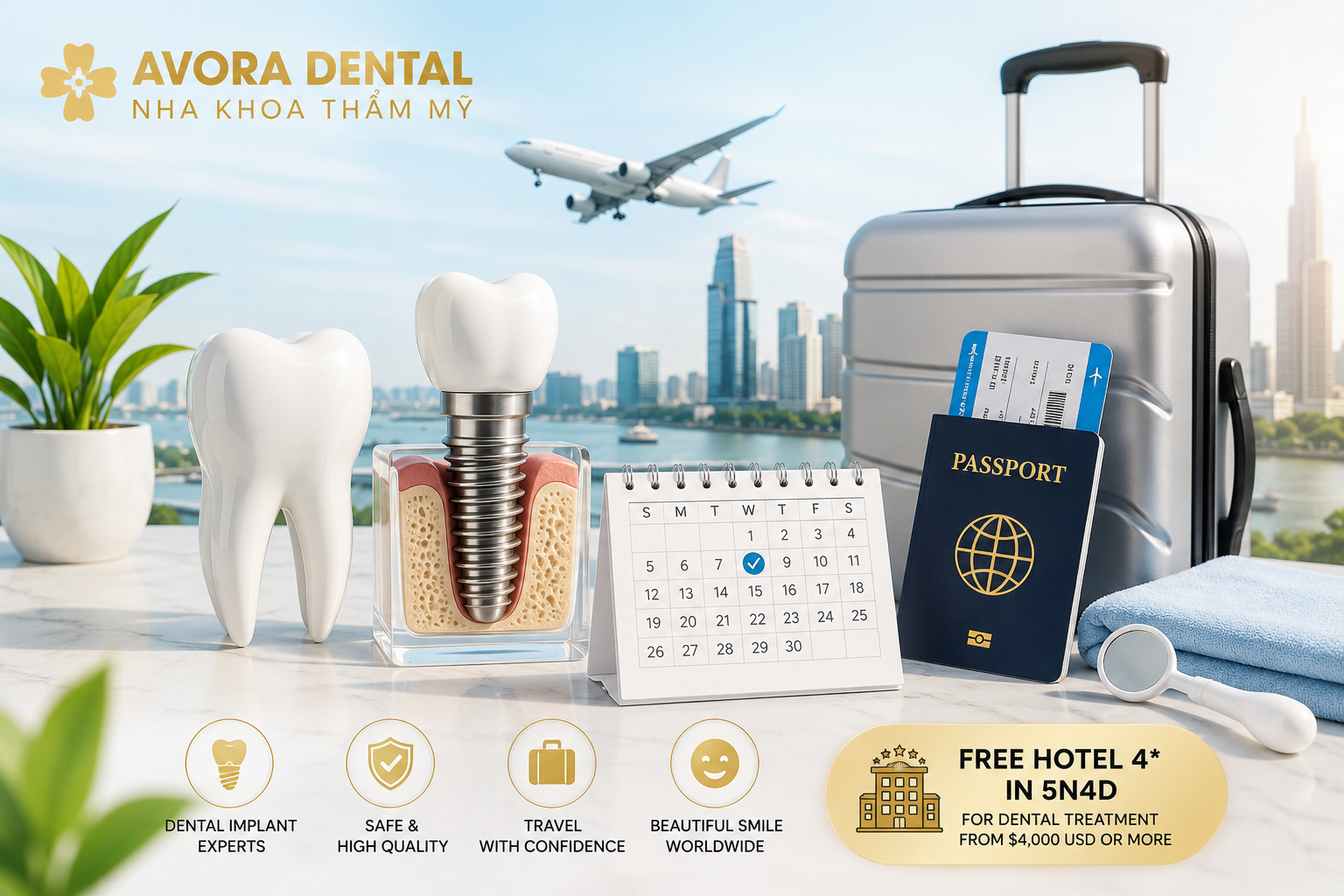
For patients requiring extensive rehabilitation, Avora Dental is currently offering a July and August promotion that includes a free 4-star hotel stay for 5 days and 4 nights for treatment plans valued at $4,000 USD or more. This program helps international patients enjoy a more comfortable recovery experience while reducing travel expenses.
You can learn more about implant safety recommendations from the American Dental Association through American Dental Association.
General oral health guidance regarding dental implants and recovery can also be found through World Health Organization Oral Health Resources.
How Can You Prepare for Dental Implants Before Travel?
Preparation plays a major role in successful outcomes.
Schedule a consultation early.
Share your complete travel itinerary with your dentist.
Avoid smoking before and after surgery.
Follow all medication instructions carefully.
Allow sufficient recovery time before long flights.
Arrange follow-up appointments if necessary.
Patients who plan carefully often experience a smooth recovery and can continue traveling without major interruptions.
Frequently Asked Questions About Dental Implants Before Travel
How many days should I wait to fly after implant surgery?
Most dentists recommend waiting between 24 and 72 hours after uncomplicated implant placement.
Can dental implants fail because of air travel?
No. Air travel itself does not cause implant failure.
Is swelling normal after dental implants?
Yes. Mild swelling during the first few days is a normal part of healing.
Can I eat normally during my trip?
Soft foods are recommended during the first few days following surgery. Most patients gradually return to normal eating habits within one to two weeks.
Is Vietnam a good destination for dental implants?
Vietnam has become a popular destination because of affordable prices, modern technology, and experienced implant specialists.
Should I choose dental implants before travel or after returning home?
The answer depends on your treatment needs, travel schedule, and available recovery time. A consultation with an implant specialist is the best way to determine the right option.
Final Thoughts
Choosing dental implants before travel can be an excellent decision when timing and treatment planning are handled correctly. For patients with enough recovery time and proper professional guidance, traveling after implant surgery is usually safe and comfortable.
Whether you are preparing for a holiday, a business trip, or considering dental tourism in Vietnam, understanding the recovery process and planning ahead can help ensure a successful experience and long-lasting results.