If you’re planning dental tourism, one of the most common questions patients ask is: Can I fly home after dental implants in Vietnam? This is an important concern, especially for travelers coming from Australia, New Zealand, the US, or Europe.
Vietnam has become one of the top destinations for affordable, high-quality implant treatment. Many patients choose Vietnam not only because of lower costs but also because of internationally trained dentists and modern clinics. However, timing your flight after treatment is critical.
In this guide, we’ll explain everything you need to know about fly home after dental implants in Vietnam, including healing time, risks, travel recommendations, and how Avora Dental helps international patients plan safely.
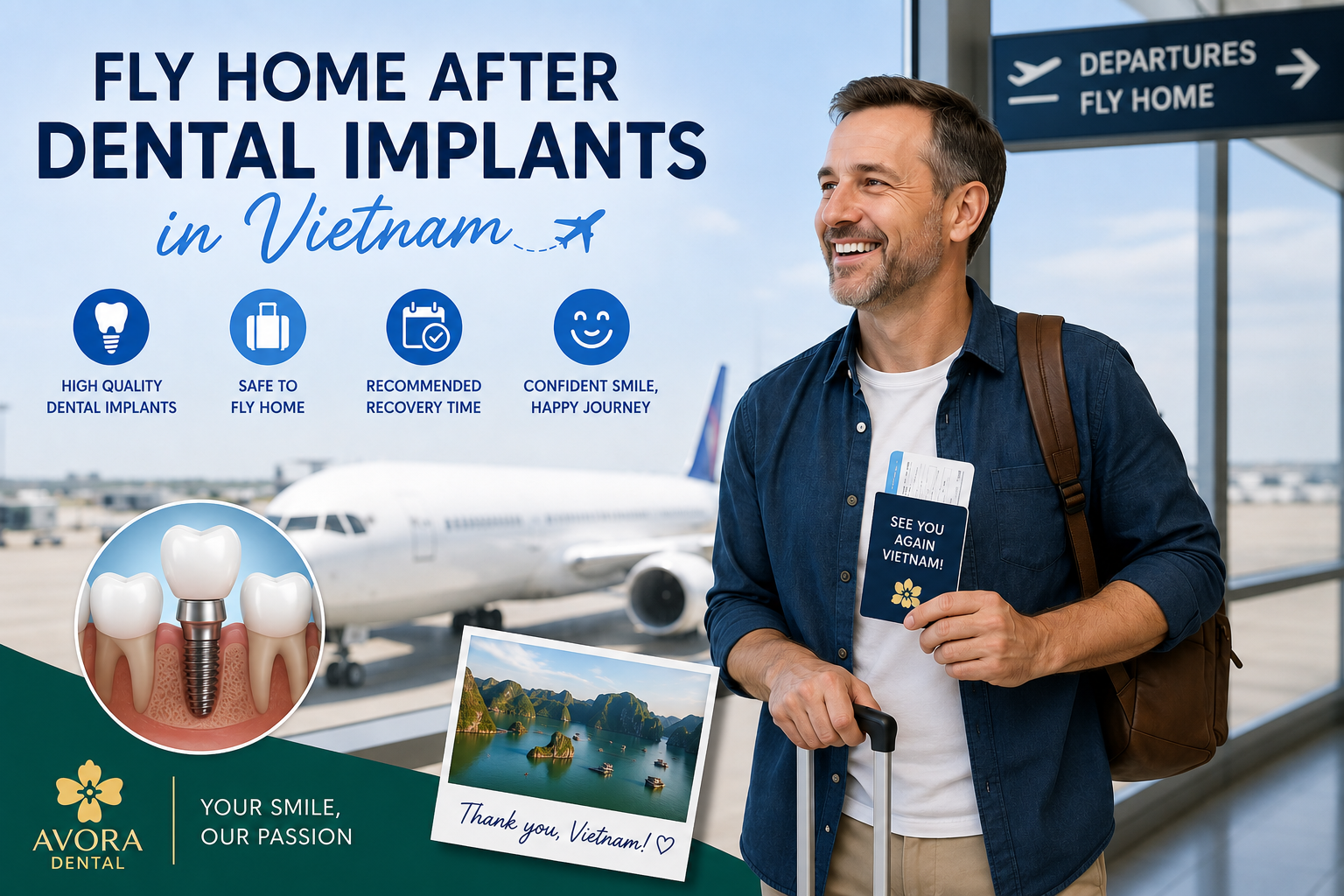
Can You Fly Home After Dental Implants in Vietnam?
The short answer is yes, but it depends on the stage of your treatment.
Most patients can fly home after dental implants in Vietnam safely, but your dentist must assess:
- Whether you only had implant placement
- If bone grafting was involved
- Whether sinus lift surgery was performed
- Your body’s healing response
- Any swelling, bleeding, or complications
Dental implants usually happen in phases:
Phase 1: Implant Surgery
The titanium implant is placed into your jawbone.
Phase 2: Healing Period (Osseointegration)
This takes around 3–6 months.
Phase 3: Final Crown Placement
The permanent tooth is attached.
For most international patients, flying after Phase 1 is possible after a short recovery.
How Long Should You Wait Before You Fly Home After Dental Implants in Vietnam?
A common recommendation is:
- 24–72 hours after simple implant placement
- 5–7 days if you had multiple implants
- 7–10 days if bone grafting or sinus lifting was involved
This allows your dentist to monitor:
- Initial healing
- Infection signs
- Implant stability
- Excessive swelling
At Avora Dental, we usually recommend staying in Ho Chi Minh City for at least 3–5 days after implant surgery.
This gives enough time for post-op checks and ensures you can fly home after dental implants in Vietnam with confidence.
What Happens If You Fly Too Soon?
Flying immediately after surgery may increase risks.
Here’s why:
1. Air Pressure Changes
Cabin pressure can affect sinus areas, especially if you had upper jaw implants.
Useful reference:
Mayo Clinic
2. Swelling Gets Worse
Long flights can worsen facial swelling.
3. Bleeding Risk
Fresh surgical sites may bleed more.
4. Infection Monitoring Becomes Harder
If complications happen at home, managing them can be more difficult.
That’s why understanding when to fly home after dental implants in Vietnam is essential.
Is Flying Dangerous for Dental Implants?
No. Flying itself will not damage your implant.
The implant is securely inserted into your bone and unaffected by cabin altitude.
The concern is your body’s healing process, not the implant.
If your surgery is straightforward, many patients successfully fly home after dental implants in Vietnam within a few days.
Best Travel Plan for Implant Patients
Here’s the ideal dental tourism timeline:
Option 1: Single Implant (Simple Case)
Day 1: Consultation & 3D scan
Day 2: Implant surgery
Day 3–4: Recovery
Day 5: Final check-up
Day 6: Fly home
Option 2: Multiple Implants
Stay 5–7 days.
Option 3: Full Mouth Implants
Stay 7–10 days minimum.
This ensures safer healing before you fly home after dental implants in Vietnam.
What Should You Avoid Before Flying?
Before your flight:
- No smoking
- No alcohol
- Avoid hard foods
- Avoid intense exercise
- Stay hydrated
- Follow antibiotics properly
These reduce complications significantly.
Tips for Long Flights After Implant Surgery
If you have a long international flight:
Stay Hydrated
Cabin air is dry.
Bring Medication
Painkillers, antibiotics, and antiseptic mouthwash.
Avoid Chewing Hard Food
Soft meals only.
Use Ice Packs Before Boarding
Reduces swelling.
Keep Emergency Contact
Save your dentist’s WhatsApp.
At Avora Dental, we provide detailed post-op instructions for all overseas patients who fly home after dental implants in Vietnam.
Can You Continue Treatment in Your Home Country?
Yes.
This is common.
Some patients:
- Place implants in Vietnam
- Return home for healing
- Come back later for final crowns
Others complete crown placement at local clinics.
Useful resource:
International Team for Implantology (ITI)
This flexibility makes it easier to fly home after dental implants in Vietnam without long stays.
Why International Patients Choose Vietnam for Implants
Vietnam offers:
Lower Costs
Implants in Vietnam can cost 50–70% less than Australia or the US.
High Standards
Clinics use brands like:
- Straumann
- Nobel Biocare
- Osstem
Short Waiting Times
Fast scheduling.
Dental Tourism Support
Airport pickup, hotel recommendations, and translation support.
Why Choose Avora Dental?
Avora Dental specializes in helping foreign patients receive implant treatment safely and efficiently.
At Avora Dental, we offer:
- Free online consultation
- 3D CBCT scanning
- Personalized treatment plans
- Transparent pricing
- English-speaking staff
- Implant treatment for international travelers
We understand the importance of timing your travel.
Our team carefully plans your procedure so you can safely fly home after dental implants in Vietnam with minimal stress.
Combine Treatment with Travel
Many patients combine their dental trip with sightseeing.
Before flying home, you can explore Ho Chi Minh City through this free tour:
It’s a great way to relax while recovering.
Final Thoughts
So, can you fly home after dental implants in Vietnam?
Yes — in most cases, absolutely.
The key is proper planning, choosing an experienced clinic, and giving your body enough time for initial recovery.
For simple implant cases, many patients can travel within 3–5 days. More complex treatments may require longer stays.
If you’re considering implants abroad and want a safe, affordable, and professional experience, Avora Dental can help you every step of the way.
Contact Avora Dental today to plan your treatment and travel schedule with confidence.