Discover the best food after dental implants to promote faster healing and protect your new smile. Learn what to eat, what to avoid, and expert recovery tips for international patients visiting Vietnam.
Table of Contents
ToggleBest Foods to Eat After Dental Implant Surgery: Your Complete Guide to Food After Dental Implants
Dental implant surgery is one of the most predictable and successful tooth replacement procedures available today. While choosing an experienced implant dentist is essential, your recovery also depends on how well you follow post-operative instructions—especially when it comes to food after dental implants.
Eating the right foods can reduce discomfort, speed healing, minimize complications, and improve the long-term success of your implants. Whether you’re receiving one implant or a full-mouth restoration in Vietnam, understanding the best food after dental implants will help you recover comfortably and confidently.
This comprehensive guide explains exactly what to eat, what to avoid, and how to build a healthy recovery diet after dental implant surgery.
Quick Answer: What Is the Best Food After Dental Implants?
If you only remember one thing, remember this:
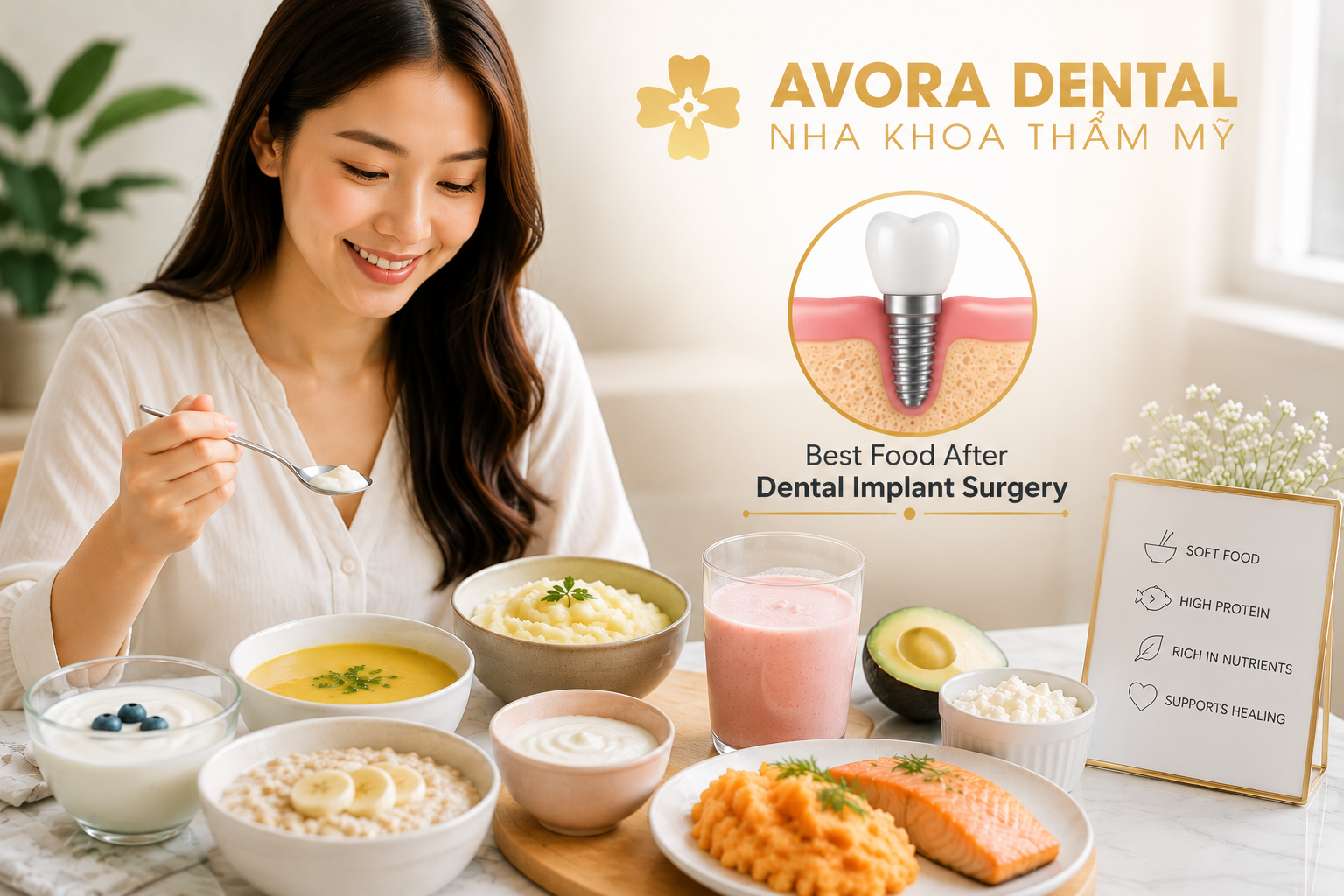
The best food after dental implants should be:
- Soft and easy to chew
- Rich in protein
- High in vitamins and minerals
- Warm or cool (not extremely hot)
- Low in sugar
- Non-spicy
- Gentle on the surgical area
Examples include:
- Yogurt
- Mashed potatoes
- Scrambled eggs
- Smooth soups
- Oatmeal
- Smoothies
- Cottage cheese
- Soft fish
- Avocado
- Bananas
Following this diet during the first week significantly supports healing.
Why Food After Dental Implants Matters
Dental implants require a healing process called osseointegration, where the titanium implant fuses with your jawbone.
During this period, the tissues around the implant are sensitive. Poor food choices can lead to:
- Bleeding
- Increased swelling
- Irritation
- Infection
- Implant instability
- Delayed healing
Choosing appropriate food after dental implants protects the surgical site while providing nutrients your body needs for tissue repair.
The First 24 Hours: Best Food After Dental Implants
The first day is the most important.
Focus on liquids and very soft foods.
Recommended choices include:
- Cold yogurt
- Applesauce
- Protein shakes (without a straw)
- Smooth mashed potatoes
- Chilled pumpkin soup
- Ice cream (without nuts or caramel)
- Banana puree
- Blended vegetable soup
Drink plenty of water throughout the day.
Avoid chewing directly on the implant side.
Best Food After Dental Implants During Days 2–7
After the first day, you can gradually introduce foods with a little more texture.
Good choices include:
Eggs
Scrambled eggs provide high-quality protein that helps repair tissues.
Oatmeal
Cook oatmeal until soft.
Allow it to cool slightly before eating.
Mashed Potatoes
Rich in carbohydrates for energy and easy to digest.
Soft Pasta
Choose well-cooked pasta with mild sauces.
Cottage Cheese
High in protein and calcium.
Greek Yogurt
Contains probiotics that support overall health.
Soft Fish
Salmon, cod, and tilapia are excellent options because they’re easy to chew and rich in omega-3 fatty acids.
Tofu
An excellent protein source for vegetarians.
These are all excellent examples of healthy food after dental implants.
Week Two: Expanding Your Diet
As healing progresses, your dentist may allow you to introduce:
- Soft rice
- Steamed vegetables
- Ground chicken
- Tender turkey
- Soft sandwiches
- Pancakes
- Ripe fruits
- Well-cooked noodles
Continue avoiding foods that require heavy chewing until your dentist confirms proper healing.
Foods Rich in Protein Help Implant Healing
Protein is one of the most important nutrients after implant surgery.
It supports:
- Tissue repair
- Bone healing
- Immune function
- Collagen production
Excellent protein-rich food after dental implants includes:
- Eggs
- Fish
- Chicken
- Greek yogurt
- Cottage cheese
- Tofu
- Lentils
- Protein smoothies
Aim to include protein with every meal.
Vitamins That Improve Recovery
Besides choosing the right food after dental implants, focus on nutrients that support healing.
Vitamin C
Supports collagen production.
Sources:
- Kiwi
- Oranges (after healing improves)
- Strawberries
- Bell peppers
Vitamin D
Essential for bone health.
Sources:
- Salmon
- Eggs
- Fortified milk
Calcium
Supports jawbone strength.
Sources:
- Dairy products
- Cheese
- Yogurt
- Tofu
Zinc
Promotes wound healing.
Sources:
- Chicken
- Seafood
- Pumpkin seeds (after full healing)
Foods You Should Avoid After Dental Implant Surgery
Some foods can damage healing tissues or increase infection risk.
Avoid:
Hard Foods
Examples:
- Nuts
- Popcorn
- Hard candy
- Ice
- Raw carrots
Sticky Foods
Examples:
- Caramel
- Chewing gum
- Taffy
Crunchy Foods
Examples:
- Chips
- Crackers
- Toast
- Crispy bread
Spicy Foods
Spices may irritate healing tissues.
Extremely Hot Foods
High temperatures can increase bleeding.
Alcohol
Alcohol delays healing and interacts with medications.
Carbonated Drinks
These may irritate the surgical area.
Sugary Foods
Excess sugar promotes bacterial growth.
Avoiding these foods is just as important as choosing the correct food after dental implants.
Can I Drink Coffee?
Many patients ask this question.
It’s generally recommended to avoid hot coffee for the first 24–48 hours.
Afterward:
- Drink lukewarm coffee
- Avoid excessive sugar
- Skip using a straw
Your dentist may recommend waiting longer depending on your procedure.
Should I Use a Straw?
No.
Using a straw creates suction inside your mouth.
This pressure may disturb blood clot formation and slow healing.
Always drink directly from a cup.
Hydration Is Just as Important
Water plays an important role in healing.
Benefits include:
- Reduces dry mouth
- Supports circulation
- Delivers nutrients
- Helps medications work effectively
Aim for at least 2 liters of water daily unless advised otherwise.
Sample Meal Plan for Food After Dental Implants
Breakfast
Greek yogurt with mashed banana
Morning Snack
Protein smoothie
Lunch
Creamy pumpkin soup and mashed potatoes
Afternoon Snack
Applesauce
Dinner
Soft baked salmon with mashed sweet potatoes
Evening Snack
Cottage cheese
This meal plan provides protein, vitamins, and minerals while protecting the implant site.
Frequently Asked Questions
How long should I eat soft food after dental implants?
Most patients should eat soft foods for approximately 7–14 days. Complex implant procedures or bone grafting may require a longer soft-food period.
When can I eat steak again?
Usually after several weeks, once your implant surgeon confirms adequate healing.
Is ice cream allowed?
Yes, plain ice cream without crunchy toppings is acceptable during the first day in moderation.
Can I eat rice?
Soft, well-cooked rice is generally suitable after several days, depending on your dentist’s recommendations.
Can smoothies replace meals?
Smoothies are excellent temporary meal replacements, provided they contain protein and are consumed without using a straw.
Recover Comfortably with Avora Dental
At Avora Dental, we understand that international patients need more than world-class implant treatment—they also need a smooth recovery experience.
Our implant team provides:
- Personalized nutrition guidance
- Detailed aftercare instructions
- Digital treatment planning
- English-speaking coordinators
- Follow-up support after surgery
- Comprehensive implant solutions tailored to international patients
If you’re traveling to Vietnam for dental implants, our team will help you recover comfortably while enjoying a safe and stress-free dental journey.
July–August Special Offer for International Patients
During July and August, Avora Dental is pleased to offer:
Free 4-Star Hotel (5 Days / 4 Nights) for patients with dental treatment plans valued at USD $4,000 or more.
This exclusive promotion helps international visitors enjoy greater comfort and convenience while completing their treatment in Ho Chi Minh City.
Contact our team to check eligibility and reserve your treatment schedule.
Final Thoughts
Choosing the right food after dental implants is one of the simplest yet most effective ways to support healing and protect your investment in a healthier smile. Soft, nutrient-rich meals help reduce discomfort, promote bone integration, and lower the risk of complications during recovery.
If you’re planning dental implant treatment in Vietnam, combining expert surgical care with proper nutrition can make your recovery faster and more comfortable. By following your dentist’s instructions and maintaining a balanced diet, you’ll be well on your way to enjoying a strong, natural-looking smile for years to come.
For additional evidence-based guidance on dental implant aftercare, you can also refer to the American Academy of Implant Dentistry (AAID) and the Mayo Clinic, both of which provide trusted patient resources on oral surgery recovery and healthy nutrition.
Suggested Internal Links (SEO):
- Dental Implants in Vietnam: Cost, Procedure & Recovery
- Full Mouth Dental Implants in Vietnam
- Your First 24 Hours After Dental Implants in Vietnam
- How Long Do Dental Implants Take in Vietnam?
- Dental Implant Recovery Timeline for International Patients
Helpful External Resources:
- American Academy of Implant Dentistry: https://www.aaid-implant.org/
- Mayo Clinic – Healthy Diet & Recovery: https://www.mayoclinic.org/
- American Dental Association – MouthHealthy: https://www.mouthhealthy.org/