Learn everything about healing after dental implants in Vietnam, including how Vietnam’s tropical climate affects recovery, what to expect during healing, and expert tips for faster implant success.
Dental implants are one of the most effective and long-lasting solutions for missing teeth. Every year, thousands of international patients travel to Vietnam for affordable, high-quality implant treatment. However, one important factor many patients overlook is healing after dental implants in Vietnam—especially how the country’s tropical climate may influence recovery.
Vietnam’s weather, particularly in Ho Chi Minh City, is warm, humid, and sometimes unpredictable. While this climate does not directly harm dental implants, it can affect comfort, swelling, hydration, and oral hygiene habits during the recovery period.
In this guide, Avora Dental explains how climate impacts healing after dental implants in Vietnam and what international patients can do to ensure a smooth recovery.
Why Healing Matters After Dental Implant Surgery
Dental implants are different from other dental treatments because they require a biological process called osseointegration. This is when the implant fuses with your jawbone.
According to the American Academy of Implant Dentistry, osseointegration can take anywhere from 3 to 6 months depending on the patient’s health, bone condition, and aftercare.
Successful healing after dental implants in Vietnam depends on:
- Proper blood circulation
- Good oral hygiene
- Low inflammation
- Healthy immune response
- Stable bone healing
Climate can influence several of these factors.
Understanding Vietnam’s Climate
Ho Chi Minh City, where Avora Dental is located, has a tropical climate with two main seasons:
- Dry season (December to April): Hot, sunny, less rain
- Rainy season (May to November): High humidity, frequent showers
Average temperatures range from 28°C to 35°C (82°F to 95°F), with humidity often above 75%.
This environment creates unique considerations for healing after dental implants in Vietnam.
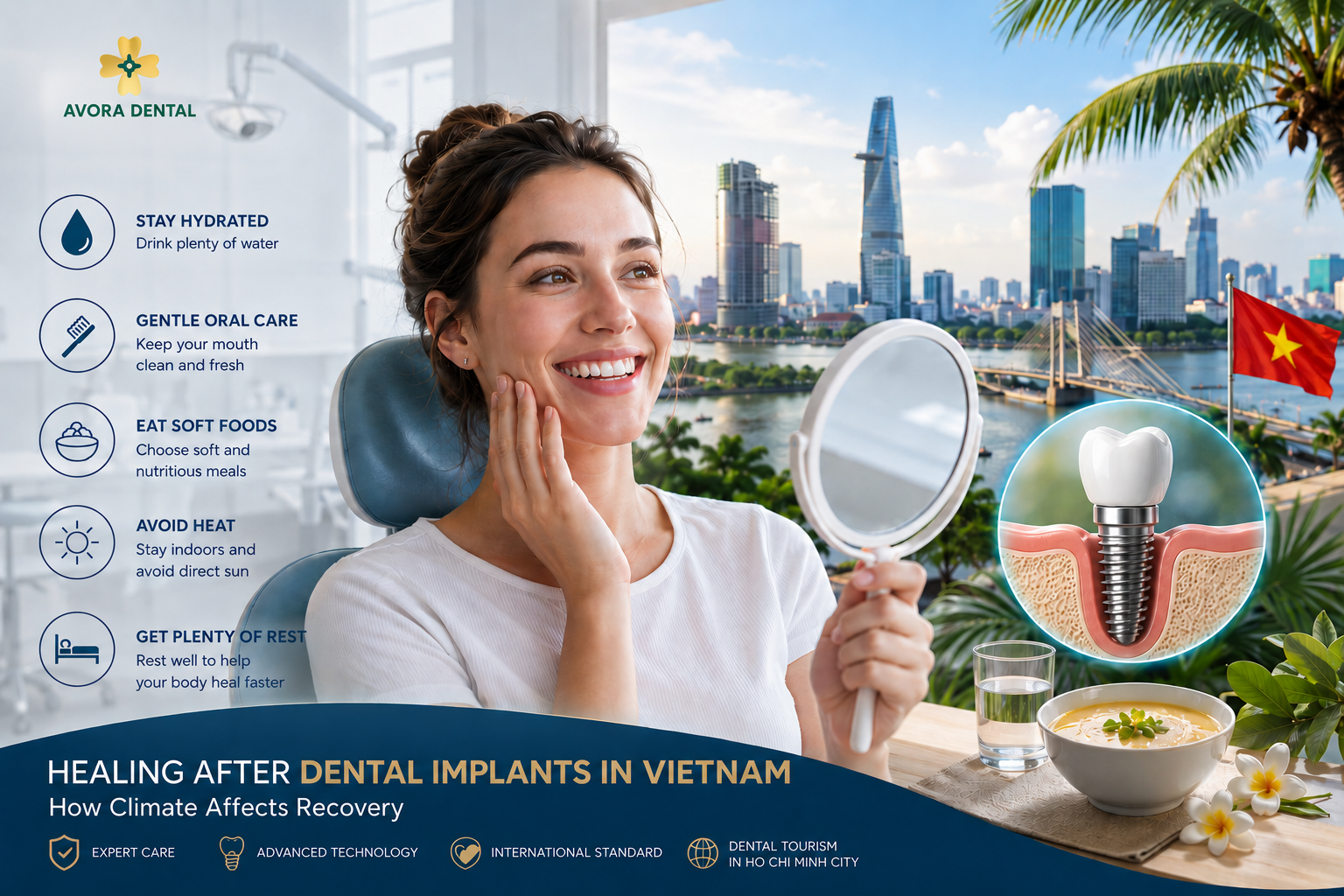
How Hot Weather Affects Healing After Dental Implants in Vietnam
1. Increased Swelling
Heat naturally expands blood vessels, which may worsen swelling in the first 48–72 hours after implant surgery.
This can make the implant site feel more sensitive or uncomfortable.
To manage swelling:
- Use cold compresses for 15–20 minutes
- Stay in air-conditioned environments
- Avoid outdoor activities in peak heat
The Mayo Clinic recommends cold therapy as one of the most effective ways to reduce post-surgical swelling.
2. Higher Risk of Dehydration
Vietnam’s hot climate can cause excessive sweating, especially for foreign patients not used to tropical weather.
Dehydration slows tissue repair and can increase dry mouth, making healing after dental implants in Vietnam more difficult.
Tips:
- Drink at least 2 liters of water daily
- Avoid alcohol and excessive coffee
- Use electrolyte drinks if needed
3. Increased Fatigue
Traveling, jet lag, and warm weather can weaken your immune system.
Your body needs energy to heal. Rest is crucial during the first few days.
How Humidity Impacts Recovery
Humidity itself does not affect the implant directly, but it can create indirect challenges.
1. More Bacterial Growth
Warm and humid environments encourage bacterial growth. This makes oral hygiene even more important.
Poor hygiene can lead to peri-implantitis, an infection around the implant.
The Centers for Disease Control and Prevention (CDC) emphasizes maintaining oral cleanliness after oral surgery to prevent infection.
To reduce risk:
- Brush gently after 24 hours
- Use prescribed antibacterial mouthwash
- Avoid touching the implant area
2. Sweat and General Discomfort
Humidity can make patients feel uncomfortable, affecting sleep quality.
Poor sleep may slow healing after dental implants in Vietnam.
Aim for:
- 7–8 hours of sleep
- Cool sleeping environment
- Elevated head position for swelling reduction
Is Rainy Season Bad for Dental Implant Recovery?
Not necessarily.
Some patients actually prefer rainy season because temperatures are slightly cooler.
However, heavy rain may:
- Make transportation harder
- Increase exposure to dirty water
- Create stress if appointments are delayed
At Avora Dental, we recommend planning buffer days in your travel schedule.
Best Season for Healing After Dental Implants in Vietnam
The ideal time for implant treatment is often during the dry season (December to April).
Advantages include:
- Less humidity
- Easier travel
- Lower infection risk
- More comfortable recovery
If you’re planning treatment, you may also want to check Vietnam’s weather forecast through AccuWeather Vietnam.
Still, with proper care, successful healing after dental implants in Vietnam is possible year-round.
Recovery Tips for International Patients
Stay Indoors for the First 48 Hours
Avoid direct sun exposure.
Your body needs to stabilize after surgery.
Eat Soft, Cool Foods
Best foods:
- Yogurt
- Soup
- Mashed potatoes
- Smoothies
- Soft rice
Avoid:
- Hot foods
- Spicy foods
- Hard foods
Keep Your Mouth Clean
Use:
- Saltwater rinses
- Soft toothbrush
- Prescribed mouthwash
Avoid aggressive brushing.
Avoid Smoking
Smoking greatly slows healing and increases implant failure risk.
Research from the National Institutes of Health (NIH) shows smokers have significantly higher implant complications.
Stay Longer in Vietnam if Possible
For simple implants, patients should stay at least 5–7 days.
For bone grafting or multiple implants, 7–10 days is better.
This allows your dentist to monitor healing after dental implants in Vietnam before you fly home.
Flying After Implant Surgery: Does It Affect Healing?
Many patients ask whether flying affects recovery.
Generally, flying is safe after 48–72 hours, but:
- Cabin pressure may increase discomfort
- Dehydration is common during flights
- Long flights may increase swelling
Before flying:
- Drink plenty of water
- Take prescribed medication
- Avoid alcohol onboard
When to Contact Your Dentist
During healing after dental implants in Vietnam, contact your dentist if you experience:
- Severe pain after 3 days
- Persistent bleeding
- Fever
- Pus around implant
- Implant mobility
These may indicate infection or healing complications.
Why International Patients Choose Avora Dental for Implant Recovery
At Avora Dental in Ho Chi Minh City, we understand the unique needs of dental tourists.
We help patients through every step of healing after dental implants in Vietnam with:
- Personalized recovery plans
- English-speaking support
- Airport assistance
- Flexible scheduling
- Follow-up guidance for overseas patients
Many of our international patients combine dental treatment with a relaxing city experience.
As part of your recovery, you can also join our free city experience program:
👉 Discover Ho Chi Minh with our complimentary city tour:
Free Ho Chi Minh City Tour with Your Dent
Final Thoughts
Climate is often overlooked, but it plays an important role in comfort and recovery. While Vietnam’s heat and humidity may create small challenges, they do not prevent successful implant healing.
With proper hydration, rest, oral hygiene, and professional care, healing after dental implants in Vietnam can be smooth and successful.
If you’re planning implant treatment in Vietnam, understanding the climate helps you prepare better and heal faster.